
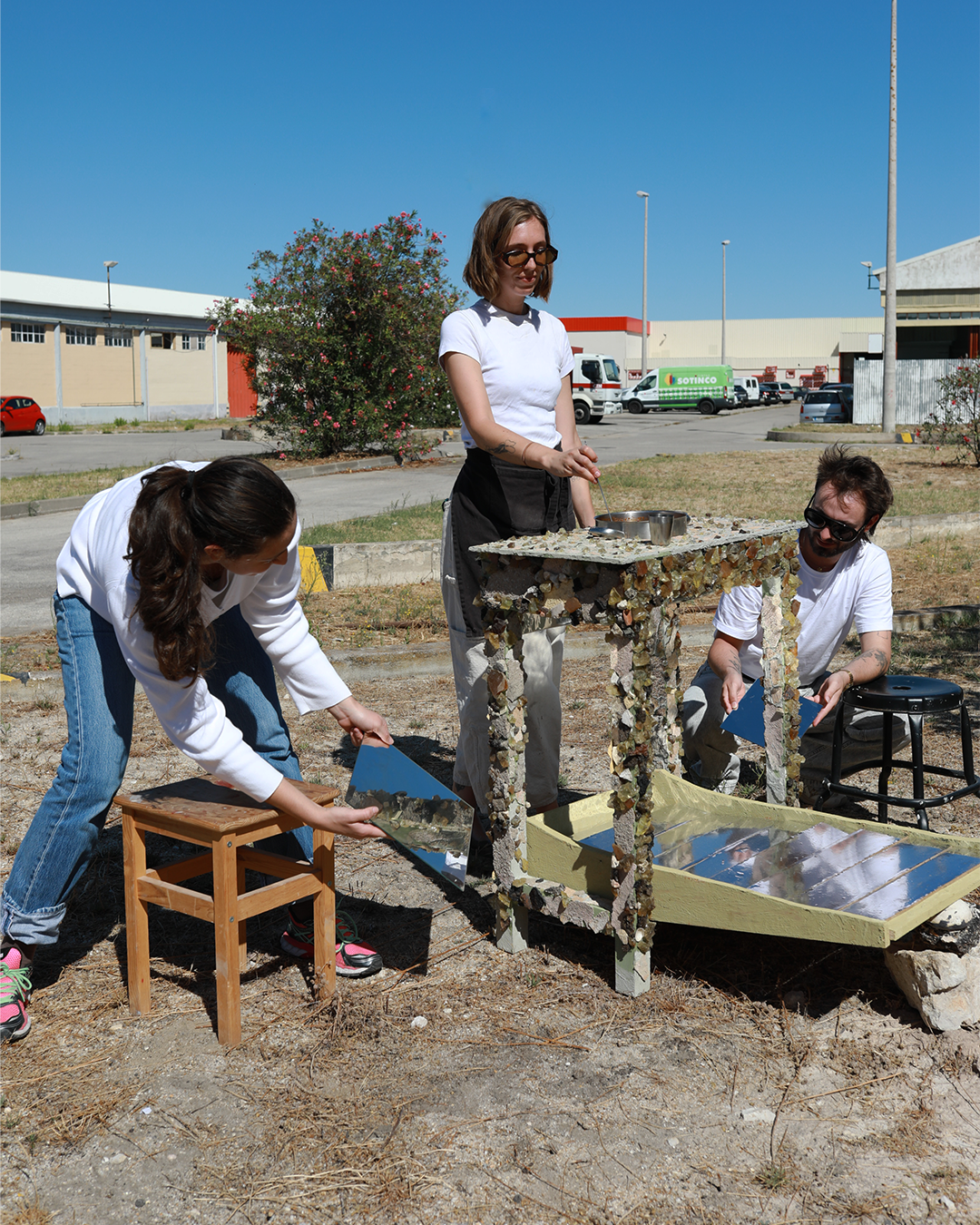
Emory Hall "Thoughts on Primrose solar cooking sculpture”, 2025
Two years ago, I was working for a performance artist, managing her archive when I read an article published by MOLD magazine, titled, “Pedagogies of the Sun”, written by Francisco Laranjo. In the article, the writer visits the home studio of an avid Portuguese solar cooking enthusiast and discovers the draw of these devices. Looking at images of these ovens I was captivated, as I was studying art and technology at CalArts and finding myself drawn to modern technology’s occult origins and early machine-learning models. The ovens looked beautiful, akin to outsider art or folk art ethos. They were hand-built with reflective paper and exposed wood seams, all of them seemingly made with found materials modified for their new use, using satellite dishes, cardboard, chicken wire, whatever. In the essay, Laranjo notes the first impressions he got from the interview with Portugal-based Celestino Ruivo on a hot afternoon. [Solar cooking] requires experience, improvisation and adaptation,” writes Laranjo about Ruivo. “A change of mentalities is necessary.” (Laranjo, Francisco. “Pedagogies of the Sun: Traveling to the South of Portugal to Catch the Solar Cooking Contagion.” MOLD magazine. Online. 27 September 2021.)
I’ve noticed in so much research on this cooking method (most of my research on solar ovens is conducted via Youtube comments and online chat forums such as Bushcraftusa.com) that most of my fascination with the building of the solar oven and the technology of solar-powered cooking comes from an anthropological perspective – what kinds of people does this practice draw in? Why on earth would you spend countless hours trying to get a chicken to cook on a piece of cardboard when you can start a fire and cook it within minutes? How difficult is it to predict the sun’s power using rudimentary tools and what happens when it fails? Does it take an engineer, a mathematician, a witch to harness enough power of the sun to cook a chicken?
In revisiting my reading of Heaven’s Flame, a compendium of solar cooking and its origins by Joe Radabaugh, I remembered a section of the short rise of solar cooking, beginning in the 1950s. Radabaugh reflects the conditions of the popular short-lived surge in the United States (Radabaugh, Joe. "Heaven's Flame: A Guide to Solar Cookers", Home Power Publishing, except (p. 1–3). Published 1998. ):
our world was still reeling from the insanity of war. people were looking for ways to create a stable and peaceful future. the worldwide nature of the previous war showed, in some ways for the first time, that we are a world community facing global problems that affect us all.
one of these global problems was the growth of deserts around arid communities. the united nations and other major funding agencies initiated many studies to design solar cookers that could alleviate some of the reliance on plant life for fuel. many top engineers of the 1950's were hired to study different aspects of solar cooking designs. these studies concluded that properly constructed solar cookers not only cooked food thoroughly and nutritiously, but were quite easy to make and use.
the UN then sponsored studies and programs to introduce these cookers into cultures where the need was most apparent. these efforts proved mostly unsuccessful. in one study, 500 wooden solar cookers were given to a refugee camp. three months later they had been chopped up and used for firewood. the social scientist concluded that traditional cooking methods were too culturally ingrained, and people were unwilling to adapt.
Radabaugh’s history - abbreviated from the excerpt above goes more into why solar cookers failed to catch mainstream for a time longer than a 60s heyday trend cycle. The cookers were too complicated to make at home, they required time beyond what seemed reasonable for daily life and lastly, felt like a second-class tool created for developing countries and not what “should” be used for cooking methods for a first-world country. The failed device floundered to obscurity, only now kept alive through scientist hobbyists and doomsday-prepper types. And myself. The common thread keeping the cookers in somewhat relevance was one of faith, in the devices themselves and faith in the practice of cooking using the sun.
European pagan traditions often center the sun as a source of vitality, restoring order and abundance through its power. In many pagan meditation practices, orienting oneself towards the sun at different points in the day serves a grounding purpose, as well as a symbolic one. A common image in mythologies of many cultures involves a horse-drawn chariot to depict the sun’s journey as it travels through the sky. At any point of any given day, I could care less on where the sun is technically at unless it poses a threat to some immediate need. The inclination that people had to chart and track the sun’s movements in the sky is lost on me as I rely upon tech to tell me where it is if I really want to know.
I began building a Primrose solar cooker (this model of oven is sometimes called a Bernard, invented by French scientist Roger Bernard) during my time at PADA this September. Bookended by a renewed interest in grottoes and spiritual sites by a short trip up to Fatima prior, I found that building the Primrose had a different pull than one of primary function. I was compelled to embellish the facade of the oven with stones found in the industrial park in which PADA is sited, and to adhere them using cement, much like the process of Madeline Buol. Buol is notable for her grottoes depicting religious themes and using found stones, shells and other bits from readymade detritus. Emulating her work, I found the slowness of stone-adhering as a way to honor hours and minutes passing, mainly as sacred. As finding the rocks and shells within the industrial park wasn’t terribly complicated, they were everywhere but there felt a finite source to them, like the resin rocks, being something that was in between a modern fossil and a “natural resource” to the closed industrial park. The process of stone gluing felt arduous in a way that a devoted person might feel in creating a shrine.
A stubbornness in myself and in the piece emerged. As I fumbled through French-translated open source instructions of the Primrose, I felt empowered to hack my way through this project but limited on my technical capacities and material limits of what can be scavenged onsite. There were no DIY TikToks on this particular model of solar oven and every illustration was in black and white ink. The outcome seemed looming and disparate the more time I spent erasing botched milimeters to inches translations. What was I thinking, building this oven. Should I pray that it works? What is the point of this technology if it doesn’t work?
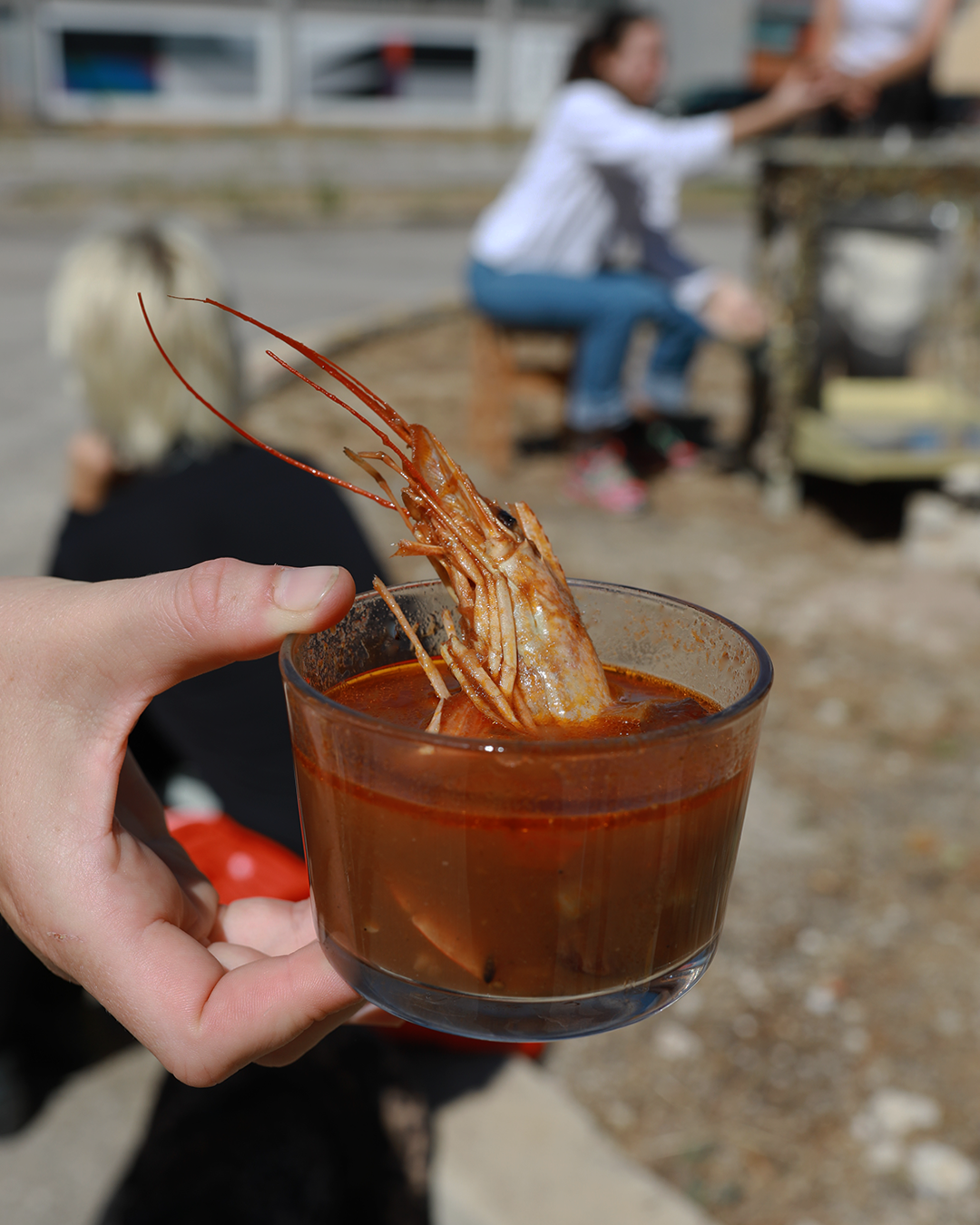
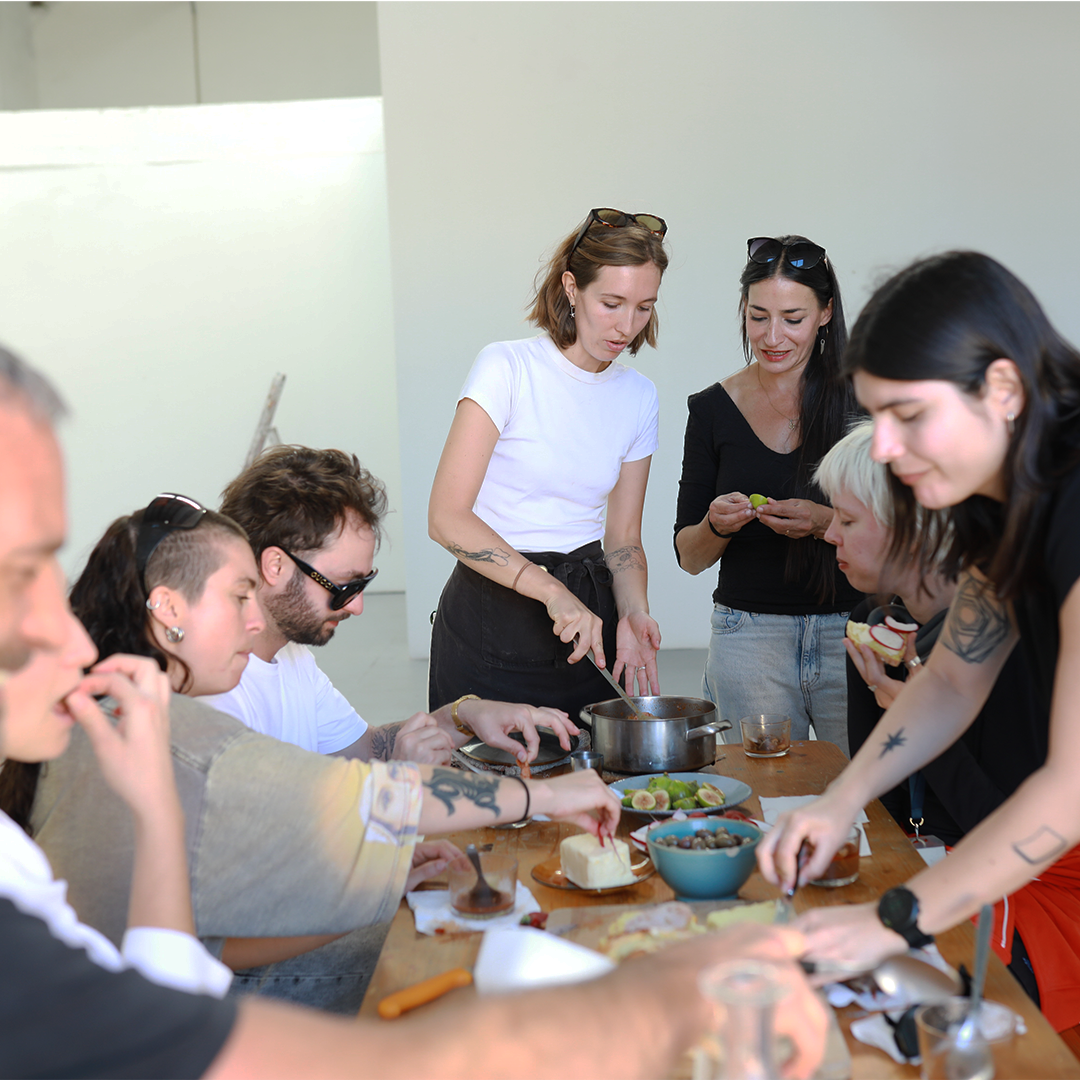
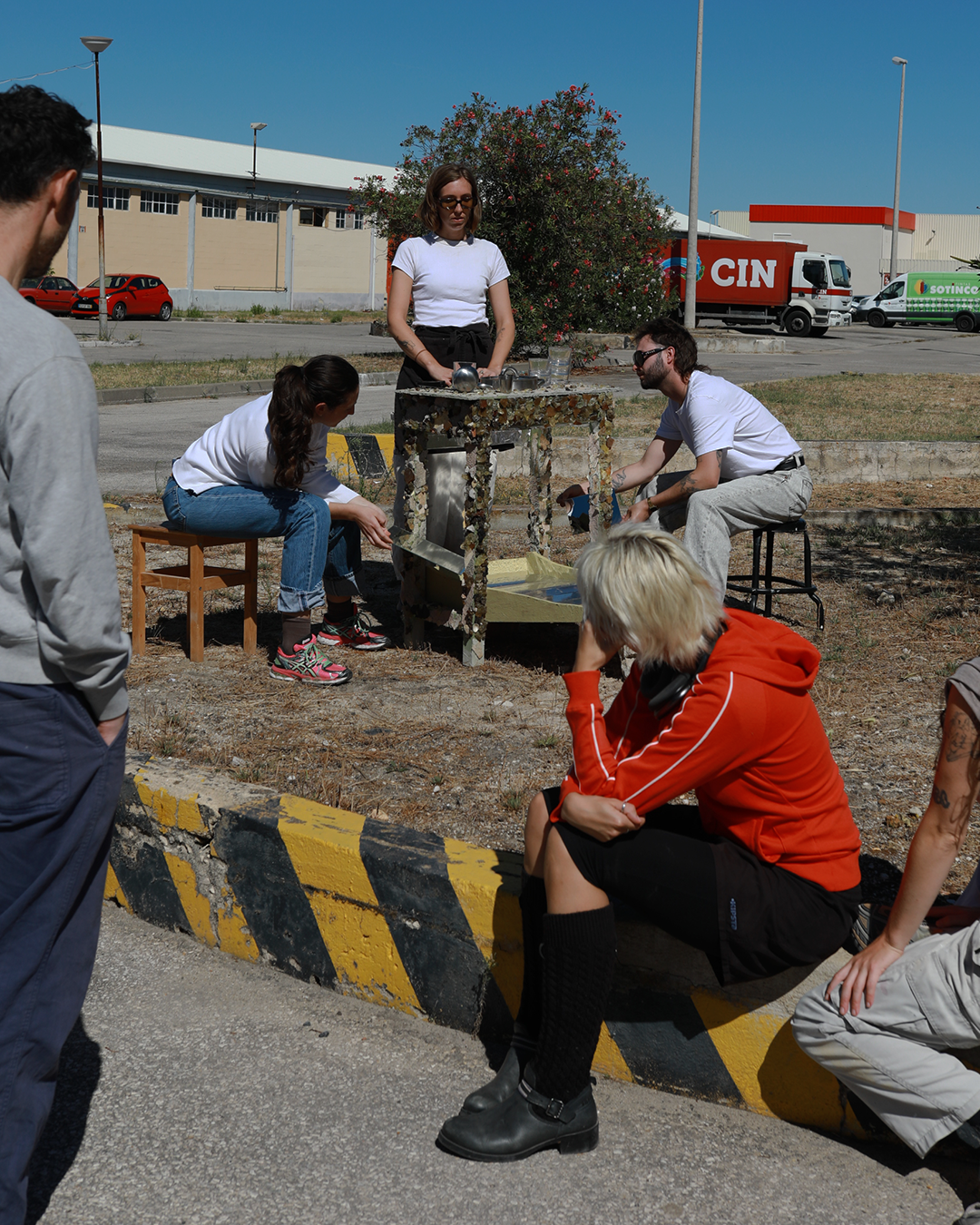
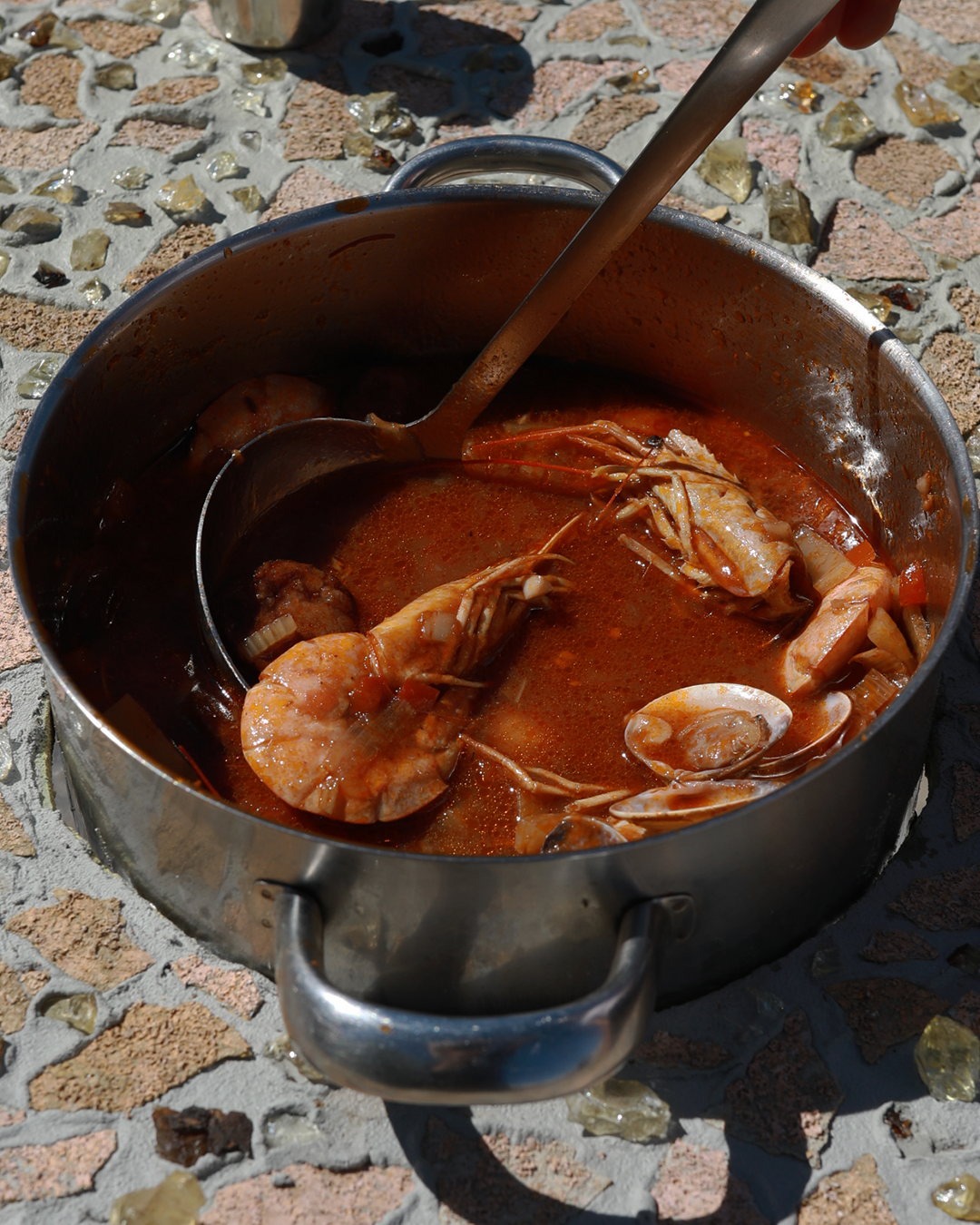
I perform with Primrose for a small audience of my residency cohort, all friends, and the temperature feebly climbs to about 54 degrees Celsius. I don’t think I could cook a potato to full temperature at this temperature. I wondered for a second why these ovens never caught mainstream, why they don’t work.
What does work is that I stood in the burning light of the day, completely under the sun’s path, its spell, its journey through the sky. My day orienting upon heat rising and falling, stepping outside to clock temperatures and irregularities in atmospheric clarity. Let the solar oven be obsolete technology. Let it belong to hobbyists and to preppers and doomed individuals seeking answers on efficiency and time at a Portugeuse artist residency where its function underwhelms its purpose entirely. My version of Primrose is a bricolage of prayer and botched math, paint chips found peeling from the building next door, dumpster-dived floorboards and semi-precious resin rocks. An anticlimactic grotto of earnest attempt, a beginning of understanding of the project writ large, why capturing the sun feels like spiritual cooking rather than physical cooking.
– Words by Emory Hall, 2025