
Long Range Studio Visit
Celso Rosa + Judith Brocklehurst
The artists met and talked for nearly 2 hours on WhatsApp, on the 9th of September.
They decided initially not to record the conversation (apart from notes) allowing for a more free-flowing exchange letting them get to know each other a bit better, and figuring out shared aspects in each other’s respective practice.
This first dialogue between them addressed the use of performance art as a way of bypassing the commercial and capitalistic aspects of the art world which allows for its non-commodification. They also spoke about the opportunity that PADA gave to them to experiment with a wide range of possibilities.
Celso spoke about the spontaneous making of work, such as the impulsive act of following and filming a stranger in a public space as Vito Acconci did that he mimicked in his hometown of Barreiro. Judith drew parallels with Sophie Calle's works and an old documentary about Barreiro. They talked about the stepping stones of making something and the barriers of showing work, what it means to be Portuguese and having a national identity—while underlining the interest in this paternal figure of Alfredo da Silva and the local emancipation from him.
From this, Judith pondered about her interest in hands and gestures in monuments (such as the one of Alfredo da Silva) and the interest in the role of the studio/artist in society. The conversation went to Celso’s performance of following steps in a YouTube recipe video of a Cachupa, and both of the artists thought about the use of food ingredients as art materials, the kitchen as a studio (or the gallery as a domestic and shared space), and this association with performance art.
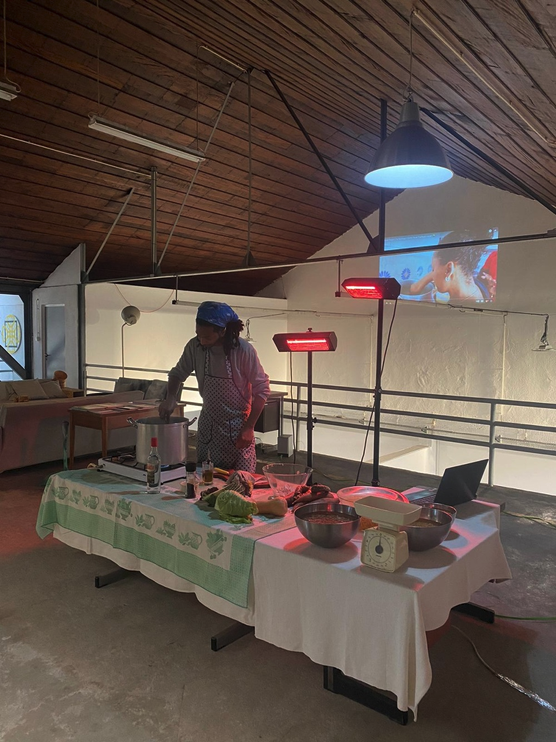
Ultimately, this culminated in the thought of food as resistance, while Celso also mentioned Rirkrit Tiravanija's work called “Soup/No Soup” from 2012 and presented a challenge for Judith, which consisted of her cooking and reenacting Celso’s performance “gola alta no mês de agosto”. (“Poloneck in the month of August")
The recorded exchange from then on is below:
-
Celso Rosa is a Portuguese filmmaker, video editor, and visual artist whose body of work consciously navigates the reverberations of social and mundane interactions, exploring how dynamics of his privilege intersect with his own Afro-diasporic heritage. Within documentary filmmaking, these reverberations surface through performative and improvisational methods, drawing inspiration from shared oral histories and mirroring them back to the self and the viewer. In performance and installation contexts, these interactions are explored through rites of passage. Since 2016, he has balanced his authorial practice with a career in the media and cultural industry. He took part in the Bolsa Barreiro residency in 2023.
-
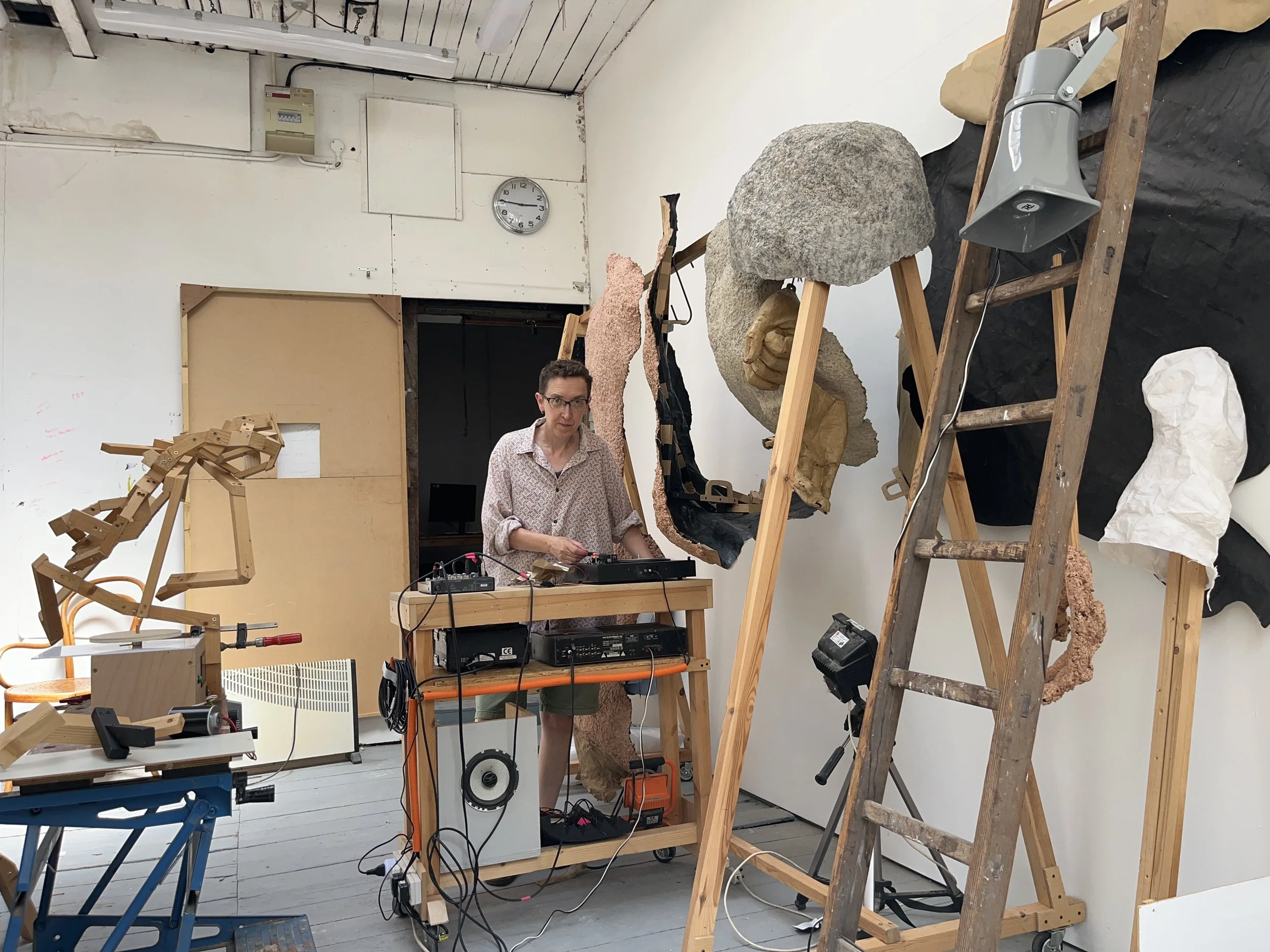
Judith is a sculptor and artist educator based in London. She often takes her lead from the politics and history of locations, people and materials she works with. The unwritten rules that the site, materials and processes suggest are used to set parameters in which something unforeseen might happen. Her practice is a form of research, it centres on the performative aspect of making rather than the pursuit of a fixed end result. She took part in the PADA international residency in 2024.
CR: Hello again Judith,
Just wanted to share the cachupa recipe (just be mindful that this is a vegan one, as the one I did in the performance. The traditional version has a lot of meats).
I'm following the original video and you can have it as a reference as well! So sorry if I'm not that clear.
-
A big pan
Garlic
Onion
Olive oil
1/2 Vegetable stock
2/3 Bay leaves
Dried yellow corn
Dried peas
Dried broad beans
Dried butter beans
Pumpkin
Sweet potato
Cassava
Cabbage or a mix of cabbages (in the video you have one that resembles a kale but I don't know if it is)
Vegan chorizo or sausages (if you can find them)
I'm not telling you the portions of each item because it actually depends on the size of your pan, but you can see it more or less like 60% beans and 40% everything else.
So, before the actual cooking, you have to put the beans in water from the day before. Whenever you begin the cooking, just take out the rest of the water that stays in your tupperware with the beans (they all must be separated because you're going to do layers).
Fyi, the order of the beans that you should put in the pan is: 1. Dried yellow corn, 2. Dried peas, 3. Dried broad beans, 4. Dried butter beans.
So, firstly you just have to do a braising of chopped garlic and onions. Let it cook a bit and put the stock and the bay leaves.
When it caramelizes, just add the first batch of beans and a bit of cold water. This part takes a bit of time, so you just have to check on it until it goes "al dente".
Put the second batch, and now you can put another batch for 15 minutes each and a bit of cold water until it's a bit above the beans.
You can add a bit of salt when the last batch is cooking and another stock (just don't add too much as I did!).
Time for the sausages, the potatoes, and cassava. Let them cook a bit and you can put the pumpkin.
When everything is nicely done, you can put in the cabbages!
When the cachupa is ready, you can TRY to separate the beans from the rest and serve it.
If you have any questions, just tell me and good luck!
Best,
Celso
JB: Hi Celso, thanks for sending the recipe through, I have been thinking about our conversation a lot. It’s so interesting to consider what reenacting your performance might do. For you, the act of cooking was (I think) a lot to do with memory and identity and, as you said, what it means to be Portuguese?
CR: I think you meant that the act of cooking connects me with my Cape Verdean roots, right? If not, that’s what I meant originally, because I remember my grandmother making cachupa when I was young, ahah.
JB: Yes, of course—but also how those Cape Verdean roots interweave and feed into being Portuguese? So for me, the act of cooking this recipe will take on different meanings—memories of our conversation… of learning from each other, of putting myself in someone else's shoes, or putting myself in their hands by following instructions.
I was also considering what we were discussing regarding ingredients of art-making in relationship to materials, where they come from, and the processes needed to make them into something. If I cook this and invite people, it comes about sharing that conversation further as well as its original meaning.
The kitchen as a studio—the studio as a kitchen—a solitary place becoming social?
CR: For me, as I said when we were together at PADA and during our conversation, it all comes down to your perspective as an outsider of my hometown, and the way you articulated your work was pretty incisive and interesting.
JB: I definitely want to continue with the work I did in Barreiro—it's still strange being back in London and looking at the work I did at PADA, which was very specific to the place and its history and doesn’t quite make sense anywhere else but there. So the way I have been working in the last year here in London feels like I’m adapting those methods to be relevant here. I wonder if it is easier to be incisive as an outsider? It feels harder to get to a clear narrative here.
CR: For me, it always comes at the expense of being an outsider. Following up with that, I think that just the act of being an artist is a factor to put in.
JB: I agree that is often the role of the artist: looking in, looking at the everyday in a different way—making the world strange?
CR: I imagine that in your country there's a lot to think about when it comes to being an outsider of sorts. Now that you're doing classes again, perhaps you have time to reflect upon that and explore different narratives that your own city might give to you, no?
JB: Actually, teaching makes me think about this a lot as we have many students from different countries and with different cultural backgrounds. I think as teachers we are often at fault for not talking and thinking about this more. Moving on to talk about hands...
CR: I didn’t tell you, but for example, the theme of hands really impacts me. I really don’t know why; perhaps it has something to do with work or with aging itself, when you see some calloused and wrinkled hands.
JB: Yes, hands are so interesting. I’ve been thinking a lot about hand gestures, and again it comes back to language—“open-handed”, closed fists, “heavy-handed”… I never considered myself a figurative sculptor, but I’m enjoying how the abstract shapes work with the hands.
CR: And I researched that term “emancipation", and it means, in Latin, "liberation from parental authority". It comes from e manu capere, which means "to take from the hand".
JB: This is really resonating with me since we last spoke.
CR: Your hand of Alfredo da Silva really takes another meaning for me and, as said in the conversation, really makes me think of the parental role/control he had when building CUF.
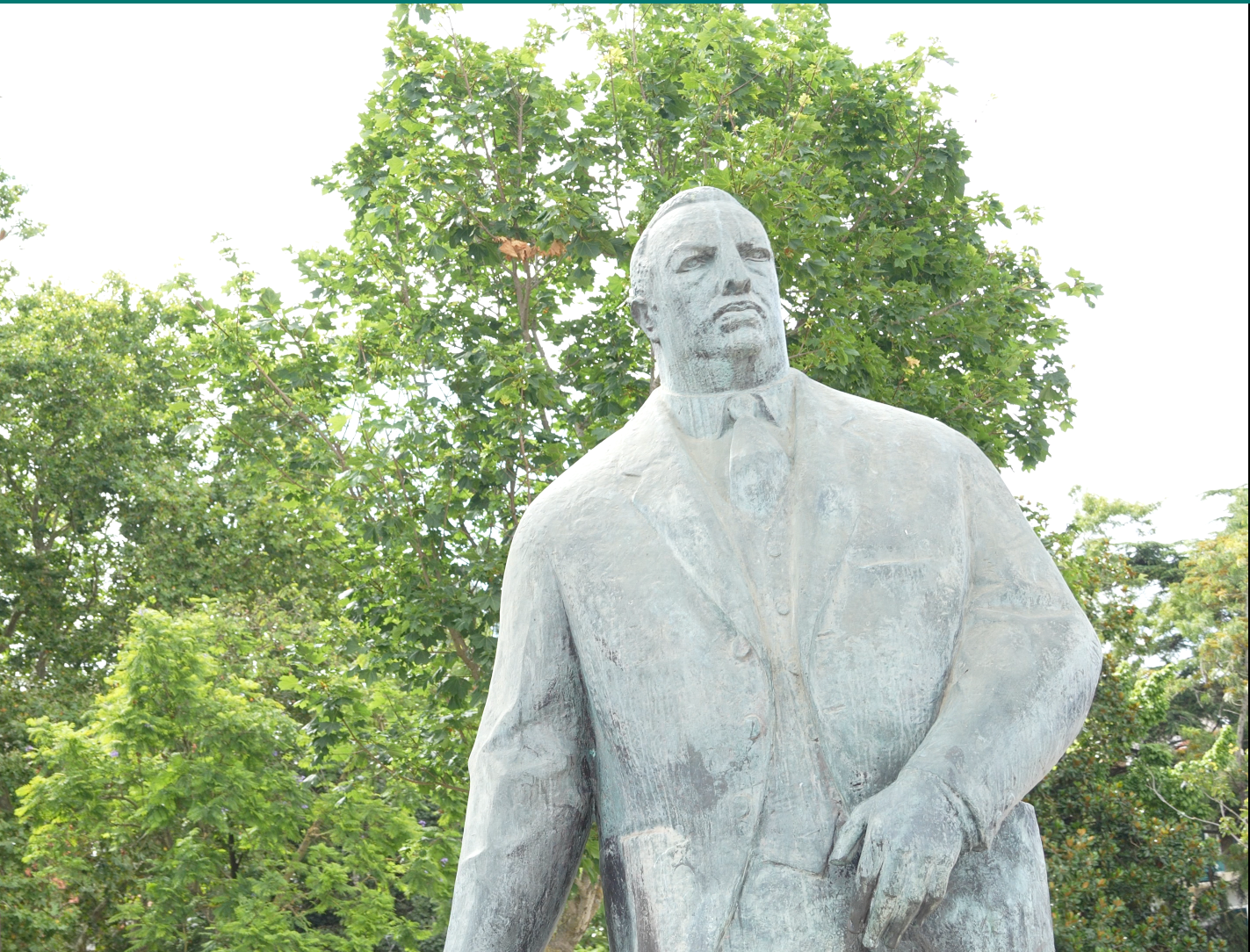
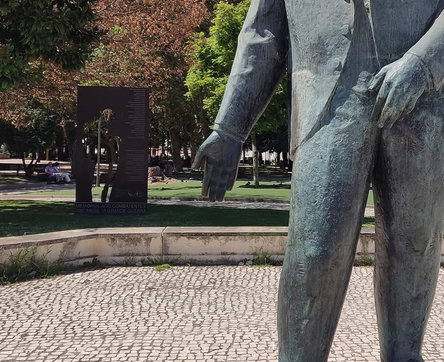
JB: This expanded relates to many patriarchal figures that are dotted through our cities in bronze… I’ve been reading a book about memorialising the past—the idea that remembering, challenging, and working through the past is important work. This is particularly true in countries like Britain that are still not dealing with their history of colonial oppressors and the legacy of this. Do you feel that the statue of Da Silva in Barreiro is a reminder of injustice or does it still position him as the father figure—provider of work, school, housing, and healthcare? Could the statue be used to start or unlock those conversations?
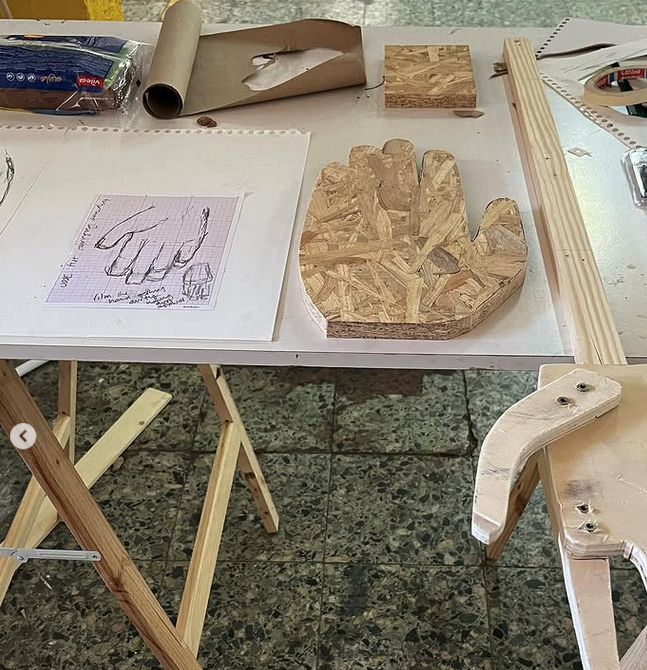
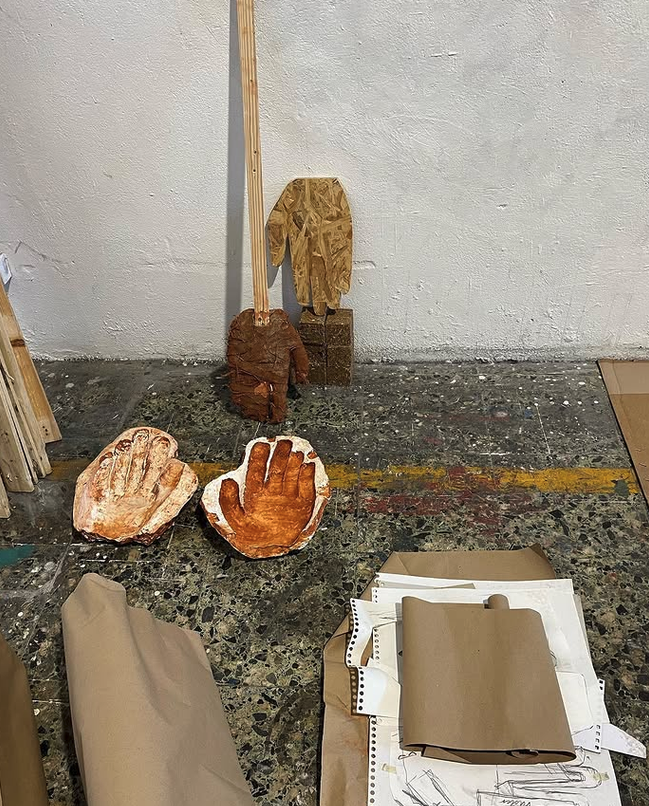
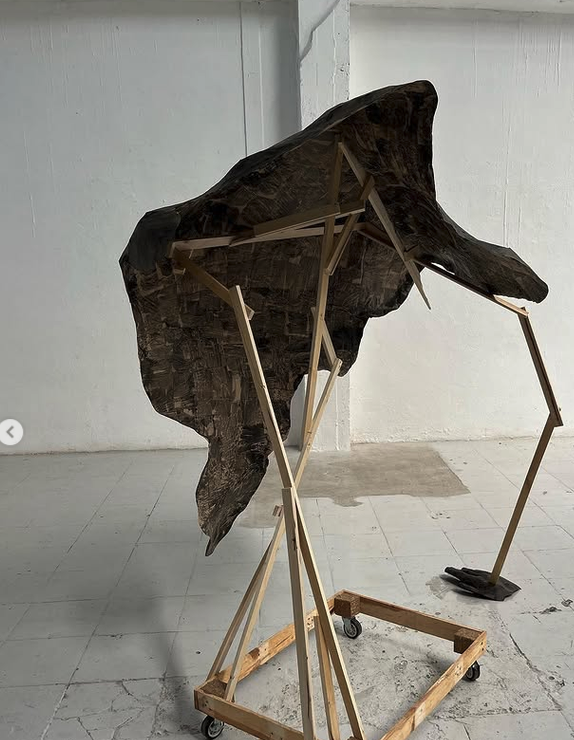
CR: It's funny for me in relation to the material that's used for the statement of patriarchy because in Portugal we mainly use marble—a rich but poorer material than bronze. Alfredo da Silva is a different conversation because his heirs still hoard a lot of money. I think it’s still a huge conversation that has to be done before we can untangle this emergent force of the far-right everywhere, unfortunately…
Back to cooking in the studio
CR: I really like your thoughts about re-performing and taking things from other perspectives. Perhaps when you do it we will have more to talk about regarding that? Considering that we both have performative ways of thinking and doing our work.
JB: Unfortunately, I had to postpone the evening of performance I was planning—but hopefully I will get back on track and will let you know how I get on. As the season changes, the only way I will get people to come to the unheated studio will be the promise of hot food!
CR: I totally understand but please tell me if you need anything!!
JB: It's now -4 degrees outside and I haven’t been to the studio for a while, but spring will arrive and then I will get cooking!
On precarity and juggling interests
JB: How is your work going? Hope you are having a smoother path into Autumn.
CR: When I came back, I immediately started another reception job and it's been quite hectic just to try to have a seat in my office, so it's been postponed as well… At the moment I’m preparing for a DJ set and next week I can get back to my 1 hour minimum in the studio!
JB: It is difficult to get the balance—in the end, I say yes to everything and now I’m looking at the end of January being scarily busy!
CR: PADA really gave me a will to do work but I'm always afraid of the monetary hazards and usually I'm accepting jobs left and right. For me, it’s really hard to keep a balance but I always try to do some work here and there…
JB: Do you have any ideas you are working on? Do you see DJing as part of your practice? I’m often busy trying to keep people dancing and would like to be more experimental with it.
CR: For me, it's so rich when you can have your own work transform itself and perhaps have some connections with past work or other preoccupations… I see that you had a lot of other experimentations with some video, sound, and dance projects in collaboration. Do you think that your past work is finally catching up with your “main" work?
JB: You are totally right on this—when I’m working with special educational needs students I find performance comes naturally. I need to have confidence that this will happen in this aspect of my practice.
JB: Over the holidays I've been doing the usual juggle of marking and accepting offers to take part in a couple of different things, as well as family stuff, cooking, and also doing a DJ set on New Year's Eve.
I’m doing a performance/lecture in Glasgow later this month where I’m going to talk about my practice. So I’ve been looking at some of the older works and seeing how they connect with the work I did at PADA and since.
CR: I am in the midst of a lot of things happening too.
At the moment I'm finishing a movie that I did in PADA so I can send it to some festivals and preparing a vinyl DJ set that will be a small presentation where I will cross with my video archive as well!
We can talk in the near future if you want: starting from February I'll do my last day job switch for a new one that I expect to remain in for a long time, so I'll have a bit more time on my hands.
After a busy spring - the artists had time to catch up again
JB: Hi Celso,
Hope you are well and enjoying the football. Interesting that Cabo Verde is suddenly in the news and even football commentators are talking about the players eating cachupa!
I’m planning on cooking in the studio later this week. And I was thinking about how to frame it; we talked about cooking as a performance, but there are also so many other ideas that touches on—both personal and societal, thoughts on memory and identity, food and colonialism. Also, what does it mean for me to ‘re-perform’ without the associations you have with the food? Do you have thoughts on questions or provocations I could introduce while cooking and sharing the cachupa?
CR: Hey Judith, usually I’m not really into football but I’m getting hyped with the path that the team is taking ahaha.
Well, immediately I was thinking of you trying to use most of the vegetables that were originally from the UK (I surely don’t know which would be those) and the challenge that you could have finding them.
JB: In London you can get everything—we have Turkish and African shops nearby—but I have never cooked with cassava or dried corn. Which speaks to what you mention below… I was wrong—I couldn't get the right kind of corn which is the basis of the dish!
CR: When I saw your message, I was thinking of this kind of clash between our ancestry and the way that both of our countries used the power of the empire to maintain it.
JB: Exploitation of the global south for resources and labour is also still happening despite talk of decolonisation...
CR: Hello again Judith, I think I’ll be coming back to this again and again because those questions are really hard to grasp… I’m thinking of this perhaps as a letter that I sent you, mainly requesting you to give me another view. With that I mean that your body and your subjective thoughts on the making of the food could help me answer some of the questions I have, that permeate most of the work that I do. Also, being a European person (with no attachments to Cape Verde) proposing to do that—it adds another string to my questions about memory and colonialism, and what that brought to all of us—globalisation mainly?
I think these really difficult conversations can happen through cooking and eating together—is it that that makes this an art work that can travel and evolve?
I don’t know if you relate to this with other family recipes, but when I had an aunt or my grandmother doing cachupa, I felt almost that they were a cross between scientists and witches. Always adding new ingredients, opening the pot and letting the steam come through…
(In my performance I wanted to have a lot of heaters around me so I could feel the same heat that they felt, the same kind of excitement, but I think in that aspect it failed a bit). That part is so vivid in my memory that in a way I’m happy that you’ll have that kind of experience as well… Doing the performance again, in this aspect, could act as a more direct way for you to enjoy the piece that I did, almost as the Fluxus group were doing way back when, with the written recipe that I shared being the instruction manual.
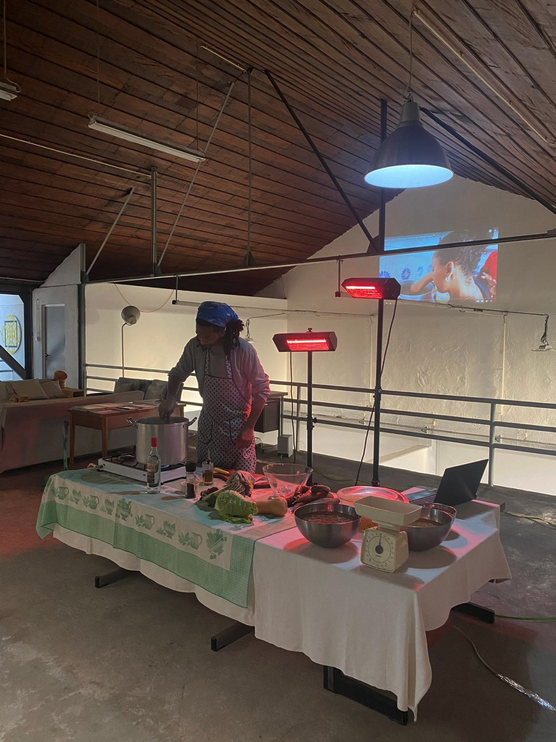
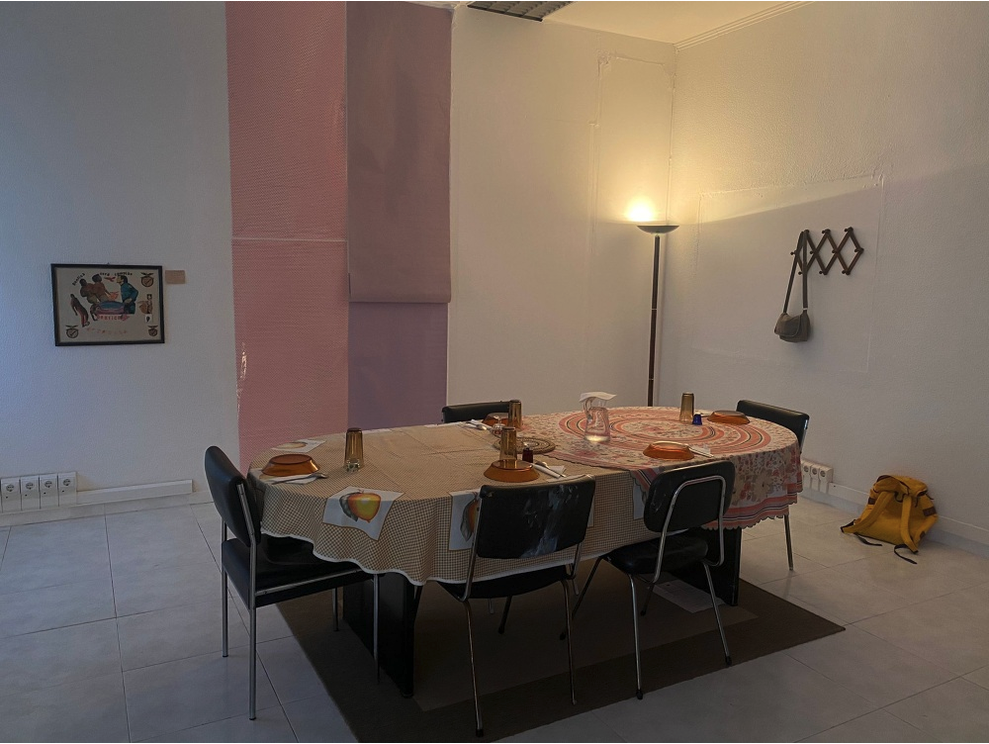
JB: Thanks Celso—yes, so much to think about… I’m going to start inviting people tomorrow! Then have another look at the recipe—with the idea of the recipe being instructions for a performance… I think that’s a great idea… I’ll keep thinking more and respond in more detail tomorrow!
Reflections on Cooking the Cachupa
JB: So I’m thinking about the recipe as instructions to make an artwork. The food as materials already raises questions: Where was the ‘raw material’ grown? What is its history of use around the world? How easy are they to get hold of, and how are they labeled—"Exotic"? How do we as artists come to know them?—through process. All the kitchen equipment are tools to make the work. The kitchen becomes the studio. The recipe serves as an instruction manual of how to make the dish. Those invited to eat become part of the work—participants rather than a passive audience. Through this sharing of your “recipe-instructions,” your ideas and questions become present. Hopefully, conversation will flow?
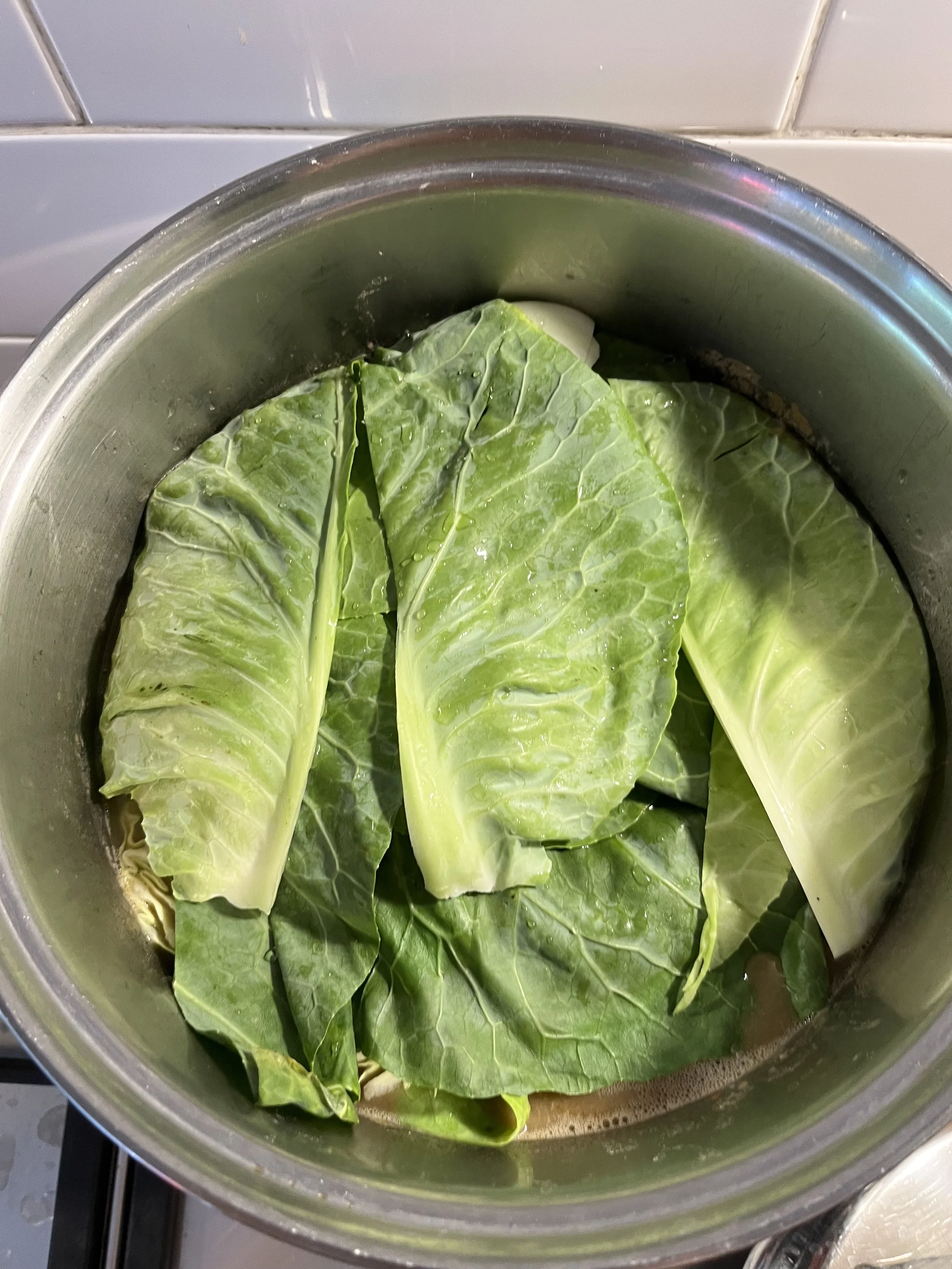
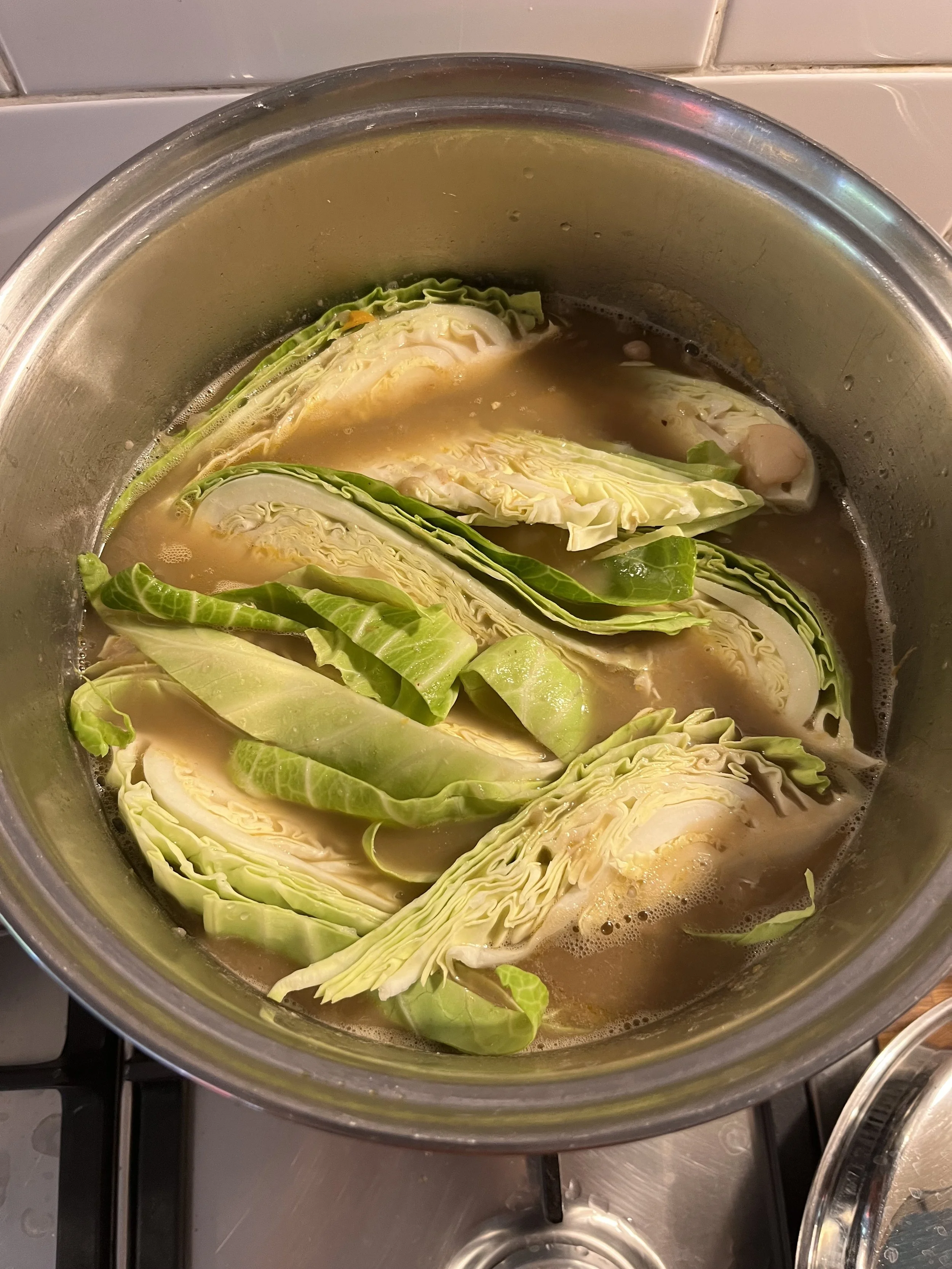
CR: In my original work, I wanted people to have the taste and smell of the cachupa but I also had another installation in my studio that was meant to be a dinner table set for my nuclear family. What happened was that the only member of my family that went was my mom and when I finished the cachupa so late that only some of my friends tasted it.
When I was making the recipe/work the conversation flowed immediately and for one I was surprised because I would have thought that I would maintain my “mysterious” demeanor presented in previous works. The act of cooking cachupa was a total communal experience and eventually, I found myself letting the goofyness of juggling between the video and the pan take hold of me and realized that it’s ok to have fun while doing whatever work you’re doing. Sometimes it is even necessary!
JB: The way I make work is often finding something out through making—with my own parameters and instructions (recipe) in the back of my mind. So I want to try to do this while following your recipe to see what that ‘different view’ might be?
While cooking the Cachupa, a number of thoughts bubbled up that link to my own practice—the not knowing and uncertainties of making something new, and wondering what people will think about it: will they get the idea, will they like it? Some ingredients like the dried corn, broad beans, and cassava I hadn't used before, so there is a trusting of the process—following instructions.
This linked the conceptual element of your piece around identity and colonialism with those ideas we discussed around outsider and insider knowledge. I felt like the outsider, just like I did in Barreiro—finding out more about the ideas by reenacting your performance. The heat, the length of time it takes to cook, the understanding of materials—which beans to put in first. Trying to break out of my own habitual way of thinking and cooking, resisting using ingredients that are familiar, which could make the dish more familiar to me.
CR: I find it, besides the precarity of being an artist, so hard to do a practice without an instructional framework behind it. For me, more and more (and even more after this performance and your reenacting of it) I almost feel that I have to have a paint by numbers approach and it’s so freezing when you don’t have a clue to where to go, but, when you find a tiny dot, it’s so refreshing to unravel it into millions of possibilities. I think I already said this in our first conversation, but I had this great teacher that told me that when you do the work and are present in it, you would find the proverbial muses in it, and for me, during this years of excavating and excavating, the muses are still waiting, I just need to be more present… I bet that while you were translating the recipe into your own ways of cooking, you gave yourself another possibility, perhaps a muse of your own, I love that!
JB: There is something about having instructions (a recipe) that is so liberating because they give you a starting point but then you can interpret them how you want. And each time you do it in a different context and with a knowledge of how it was before it will be different.
CR: Also, I think that I’m no less of an outsider than you because the place that I started while doing the work was a place of confusion, my own colonial emancipation didn’t happen until then, and it still didn’t happen until this day. It’s so interesting that you found the ways that I connect with the food while doing it, perhaps the actual context I should have done it would be in this blazing hot summer? And perhaps one of the ways to “show” this work is by other people doing it. Even the fact that the recipe and the guidelines of the cachupa is here, it could be a trigger to make someone else, somewhere, to have that experience as well!
JB: My guests (not artists) found it hard to think of it as an art performance or a finished work. But it unlocked discussions about how the dish evolved… Why these ingredients? It was a surprise to be eating what might be eaten in winter; a hearty dish with beans and veg on a hot summer night raised a realization of preconceived notions of sunny beaches rather than dishes born out of harsh realities.
It also brought up reminiscences of childhood dishes from St. Vincent, links across from Cape Verde to Brazil, and the colonial power of England and Portugal. For me, it also comes back to what we talked about at the beginning—“food as resistance”—a way of having conversations and coming together that wouldn't otherwise happen.
CR: What did you mean when you said about childhood memories from St Vincent? Because my grandparents come from the island of São Vicente (St Vincent) in Cape Verde!
So funny that your friends found that cachupa was a winter kind of food. For me it always was an all year dish, we always have an excuse to eat it.
JB: My friend Dawn has roots in St Vincent in the Caribbean and was talking about eating cassava as a child.
CR: Just discovered it now, yes. This cross between both St. Vincent islands it’s so odd at the end of our convo.
I discovered, also, that one of my favourite zouk bands (a music genre from Guadeloupe and Martinica) it’s called Kassav which name comes from a flatbread that's originally made with cassava!
JB: Also the name St. Vincent was an imposition of Catholicism as a form of ownership and control…
CR: Yes for sure! It all comes to the same conclusion...
JB: When we were eating cachupa we talked a lot about the ingredients and where they came from and how they don’t need refrigeration.
CR: Yes, most of the vegetables can be kept in the house for long!
JB: There was lots of time to think while stirring the pot - I had enough left to make refogado (refried cachupa).
CR: Yes, refogado!! With a fried egg on top of it please!!
JB: I love leftovers… in sculpture too.