
Long Range Studio Visit
Alice Sheppard Fidler + Aimée Henny Brown
This Long Range Studio Visit between Alice Sheppard Fidler and Aimée Henny Brown took place over the phone in a single sitting. The following text is an edited transcript. They talk of memories of their residencies at PADA, the conversation unfolding into a wider reflection on making: on working with found and salvaged materials, following the intelligence of process, and allowing experimentation to guide a practice. Along the way, they discover they had unknowingly incorporated the same discarded chairs into different works. A great example of the connections that thread through residencies and the frugal and careful use of materials at PADA.
-
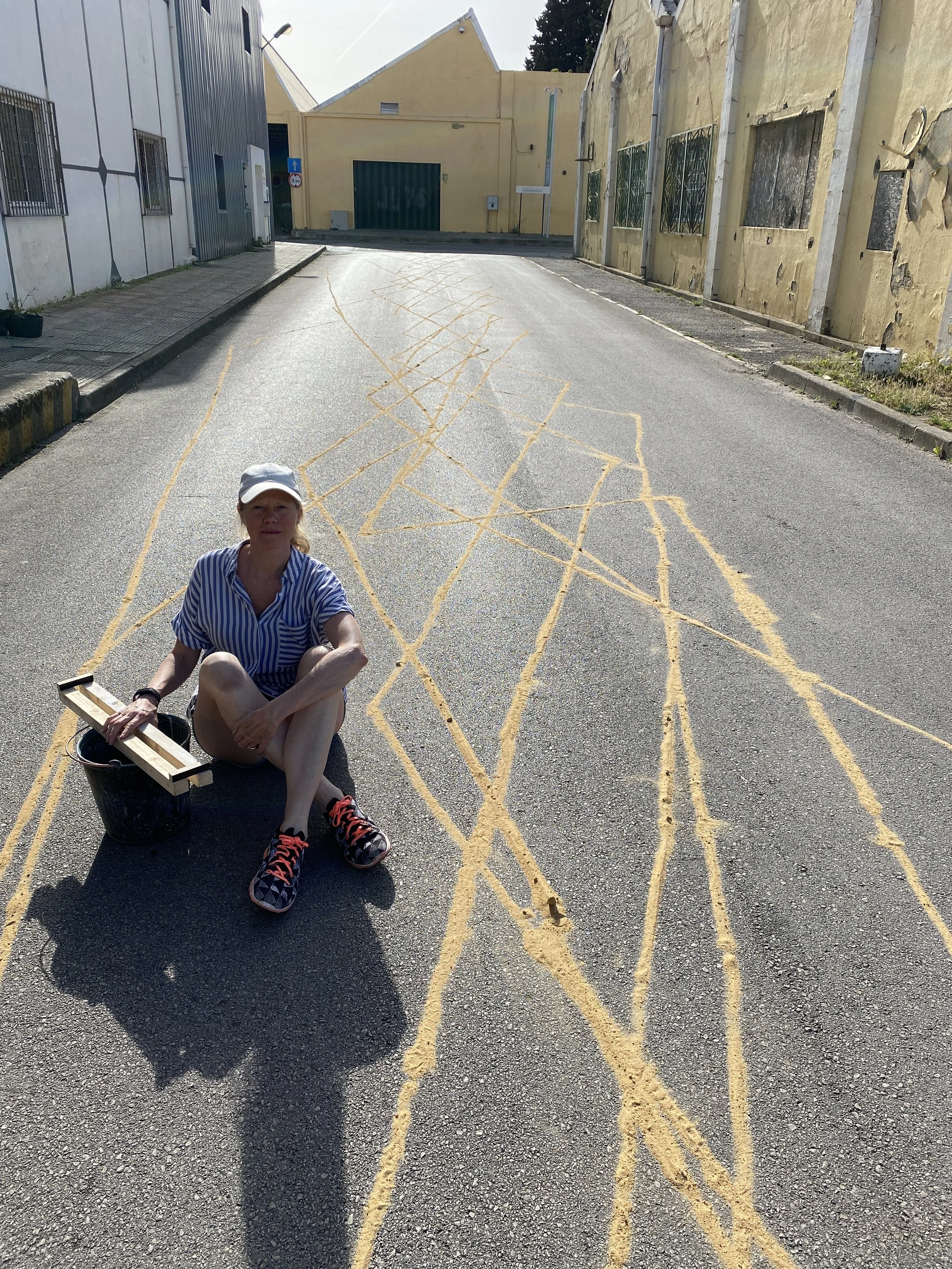
Alice Sheppard Fidler (born Birmingham, 1966) is a British artist who lives and works in Gloucestershire and London. Her practice spans sculpture, installation, video, performance and drawing and is sited both within and beyond the gallery, often engaging with spatial, material and embodied forms of experience.
In 2025, Sheppard Fidler was selected as the winner of a solo presentation at GPS Gallery, London, held in June 2026, and in 2025 she had a solo presentation at Both Gallery, London. In 2023 she received the Gilbert Bayes Award from the Royal Society of Sculptors, the Chapel Arts Emerging Sculptor Award, and an Arts Council England Develop Your Creative Practice Award. She exhibits in group exhibitions nationally and internationally including London, Milan and Paxos, Greece.
Sheppard Fidler is a founding member of Studio Voltaire Gallery and Arts Charity, London, and runs the artist-led initiative The Hide Artist Retreat in Gloucestershire. Prior to completing her MA in Fine Art at the University of the West of England in 2020, she worked in design for television, film and fashion, a background that continues to inform her interdisciplinary approach.
-
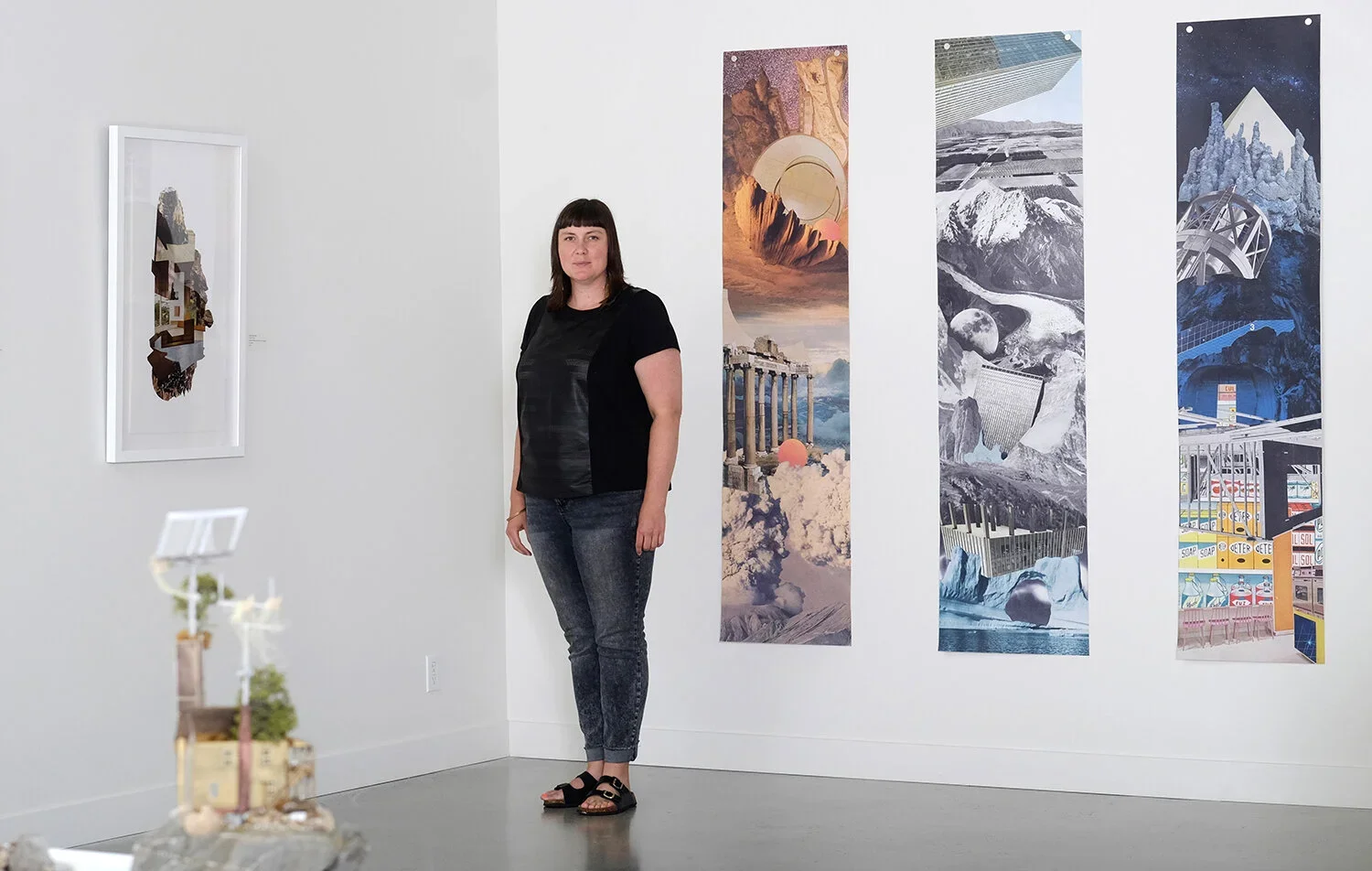
Aimée Henny Brown, an artist and educator of settler ancestry, completed her BFA at the University of Alberta and obtained her Masters in Fine and Media Arts at NSCAD University in 2007. Aimée’s artistic practice engages archives, research and printed matter to question historical content within her contemporary art practice. She has received several awards and grants, notably the Joseph Beuys Scholarship for Artistic Merit and several Canada Council Production Grants. Her collages, drawings, performances and bookworks have been presented nationally and internationally, with group shows in Los Angeles, San Francisco, Kentucky, Japan, Germany, Scotland, and Portugal, and exhibits regularly in Canada. She has attended numerous artist residencies with galleries, artist-run centres and universities in North America and abroad. She is an Assistant Professor: foundations, 3D and extended media, with the University of the Fraser Valley.
Aimée’s site.
ASF: My father was an architect, and his father was an architect. Design definitely featured - this heritage of the figure in space, creating spaces, considering environment, ambient light, and the human experience within the built environment. It's not surprising that my first career was as a set designer. I'm fascinated by the presence of the human or the effects of human wear and tear on materials and environments. Looking back, I can see this training that I've had by default.
AHB: I'm always interested in how to give credit to the shoulders that we've stood on, whether that's by choice or just by rote or even just passive absorption of information. Our family or chosen family climates that get us where we are.
ASF: I do always feel eternally grateful for the craft moments or the cooking moments with my mother, or looking at my grandfather's drawings. All of those things are small moments, but they're so profound?
AHB: The depth of a moment isn't necessarily about linear time. Its impact can be deeply felt regardless of the duration. Something that I wrestle with now is this idea of things being quite perfect, or knowing that's very impossible but aiming towards something that is very tidy and very neat. I'm a traditionally trained printmaker, so that comes hand in hand with the medium.
ASF: I am not a printmaker, but I did play around with it when I had the chance on my MA. I loved the whole atmosphere of the print room, but there's so many rules. Something else for me is that printing isn't the thing, it's the print. It's the print of the thing. And the mould is not the thing. And I can't get away from the thing.
AHB: I think there's something so enigmatic about the mould or the matrix, the original, and the process that's embedded in it. I'm also interested in the process over the outcome. And that's big trouble if you're making a bronze cast or if you're interested in showing your prints. Because if you're in love with a copper plate or you're in love with the silicone mold, what do you do with that? I find that really fascinating because the work I make now is so much more transdisciplinary and it thinks through printmaking,, but I'm so much more interested in material investigation and letting process be a very sincere part of what gets shown or shared.
ASF: I've got this show in London in October and my first instinct was, “okay, so who am I going to be with?” I've orchestrated this situation for myself, but my immediate thing is the people. It's not what sculpture am I going to put in there. It's all about process and not about outcome. It's all about being present in the room.
AHB: But that invitation does have some parameters in order to understand “When do we stop? Do we stop?”
ASF: Exactly. There's some very practical boundaries. We’re not collaborating. We're not going to make a new piece of work. It's just the response and it is about the process .It's revealing; it's being with that process and that process being visible and being accessible.
AHB: So often deadlines or deliverables need to be performed. But I'm really curious about this decision to engage with process or meaning making, for that to be the serious play as opposed to the final object or thing. And I think what I'm fascinated about is that it really disengages from the object as a commodity. You're asking the work to be separate from market value. I think that's deeply challenging for a lot of institutions. It's also really challenging for ourselves because I think, if we look at our artistic lineage, that's what it has been about for a really long time, whether we want to admit it or not. It's also waving goodbye to money.
ASF: Nobody could buy it. I've got this opportunity and I've turned it into a dynamic.
AHB: I teach a course called Socially Engaged Art Practices. And I think this is one of the questions that we come back to: “What do you do when you deny the market?” What is that about? What's the curiosity of that? Because community building, relationship building is always going to deny a market. So then you have to lean into, what is the barter? What's the exchange? What do we value out of that experience if it's not monetary gain? And it's a kind of reordering of the world that we participate in as artists. There's a really elegant reordering of things. I can't wait to find out how this goes. After I did my master's, I did a lot of performance-based work. And I think a lot of that was from a place of being really, really poor. No money, no material budget, but also being really sincerely interested in what engagement means, what exchange means.
ASF: I remember seeing that on your website. What's your relationship with the body? Tell me a bit more about those performative moments for you.
AHB: I did a talk recently and someone said “Why don't you do performance work anymore?” The very honest thing of it is that I got quite sick, so I actually had to make mindful choices to not do work that was about durational labor, willfully repetitive labor, and a very sincere pursuit of strain - because most of my performance work was what I would call non-characterized performances. Some of that is just being aware of how, when I'm teaching full time (which is somewhat performative), and I'm trying to be in the studio as well, I can't be performing in both of those spaces at the same time.
ASF: Tell me about a sort of typical day or half day in the studio for you then. What do you do?
AHB: Lately I've been working on making this ridiculous set of tableware. I've been using architectural materials and housing materials to make this serving set. When all the pieces are together, it's a set of 12: plates, serving plates, bowls, cups, dessert dishes, the complete thing, but rather than being a refined bone china or a ceramic, they're plaster and clay dipped in drywall filler so they have this accumulation of material around them. There's no shortcut. It's just time. It's just this ridiculous investment. I love it because it's production based and it's repetitive and I'm really excited about that. I think I had started those dishes in 2023, I went to PADA, did the residency. Then within two months of coming back from PADA, my father was diagnosed with cancer. It was very serious and very quick. So a lot of the time between when I started the dishes and now when I've been finishing them has just been family care. So it's been a really interesting, cathartic way to re-engage with some of that work and some of that labor.
ASF: Having something that once you know what you're doing, you can just get on and do it. I don't often have that. Sometimes I have - with the forming of corrugate for a show that's in Portland at the moment I had to make 40 sheets of corrugate.
AHB: Tell me about the corrugate, because I love that material. I like how the light interacts with it. It seems that it can stand, that it has a bit of agency on its own.
ASF: There was this hut, behind and across from the studios [at PADA]. It was just a random hut that had quite interesting proportions. I had to find my anchor point.
AHB: I love that idea of an anchor point because I think that I needed a tether there as well.
ASF: It just kept saying, “I'm straightforward. I just have this normal function, pick me kind of thing.” Meanwhile, I fell in love with all the green corrugated fiberglass that was on the building. I asked if I could borrow and put back this material. I thought about the idea of not just reusing, recycling, but what if I take temporal sculpture building to the point that it doesn't just only exist in a short time, but the materials go back to where they came from. I thought that was poetic and absurd, and wanted to have that. That piece I had to leave behind, and I really have suffered without having that work around me longer. I didn't want it to become permanent. I hadn't finished with the material. The hut is such a classic metaphor, I like the fact that it's standard and I don't have to reinvent that bit. So I've got somebody to help me make a wooden frame for another one. And then I got invited to be in this Portland show. It's another environment, which is just too much information. It's been quarried and dark. I got there and it was shouting at me, it's like a clatter of stories and materials.
AHB: Especially when you have an industrial history to a place alongside the geological history of a place. If you're interested in those kind of things, excavating what you need for your work is totally overwhelming.
ASF: I have to go back to the body to tell me. It has to come from the body. I scooped up a load of dust from this stone workshop and I brought it back to my home studio. And meanwhile, I'd been to the local paper mill and got a load of recycled paper. I just thought I'll try sandwiching, laminating dust and glue and paper and seeing what happens. I don't have any classical making training other than what I've picked up along the way so I didn't really know what I was doing, the only way I'm going to find out is to make 40 sheets of it so I can make the art.
AHB: Repetition is a great teacher.
ASF: I might not like it, but I’ve just got to do it.
AHB: I love that. I think it's a phenomenal commitment to an unknown outcome, there's a lot of bravery in that.
ASF: I have to have a lot of talks with myself about bravery because the negative voice is strong?
AHB: How do you manage that? Because there's two dialogues happening. There's the sincere curiosity about what that material could do and how it reads and the fact that it's all an experiment. And then there's also “what if it doesn't?” I'm curious how you manage that?
ASF: Well, luckily, age works to my advantage because my older lady voice wins out in the end. And that's “Just shut the fuck up and make it.” Time is of the essence and how are you going to learn if you don't just make it?
AHB: 100%. We could talk about it forever. It's in the mind.
ASF: I've got a nickname for myself. It's like being a kid again; it's Meddling Puck. Puck from Midsummer Night's Dream. Meddling Puck kind of sounds like you're going say something rude. So that little voice in me wins over and then I get to make stuff.
AHB: I really appreciate the acknowledgement that the courage to do something unknown also requires a settling down of the pragmatic voices that would forever steer us in a different direction. I don't think you get one without the other. At least I haven't found anybody who's not sitting in a bit of both at the same time - the curiosity and how to follow that and keep that at center as opposed to the naysayer.
ASF: I can't make the work I want to make and chase the money, I can't conform. I haven't been able to do that my whole life. There was a wonderful radio interview with a writer, an older lady and she just said, “I only do that which is essential.” That is a mantra.
AHB: I think there is something very serious about learning to say no to that which doesn't serve us particularly well. And I think that's a particularly difficult place for women - in the sense that obligation and requirement and propriety are things that I'm constantly poking at, and a lot of my male colleagues, both at studio and at university, do not seem to have these same kind of pressures. I think there's something about getting on with it that I really appreciate. For anybody who has experienced loss or death in family, but also if you have chronic illness, there's this familiarity of the finiteness of things all the time. It's a cruel teacher, but it's a good one. There's something in it where you know that we don't have forever for things, and that knowledge doesn't allow me to shy away from really tedious projects, but it does allow me to choose the ones that I think will serve me well.
ASF: Tell me, what does a residency mean for you or where does it sit within your practice?
AHB: I have been trying to do a residency at least every second year, depending on what life allows. My preference is to have a residency where I actually am not living where I normally live, just because I think that offers a different head space, a different kind of presence. And it's also that dedication of walking away from daily tasks. There's a kind of luxury in that, when I get into that space, my mind is so hungry it just wants studio all the time.
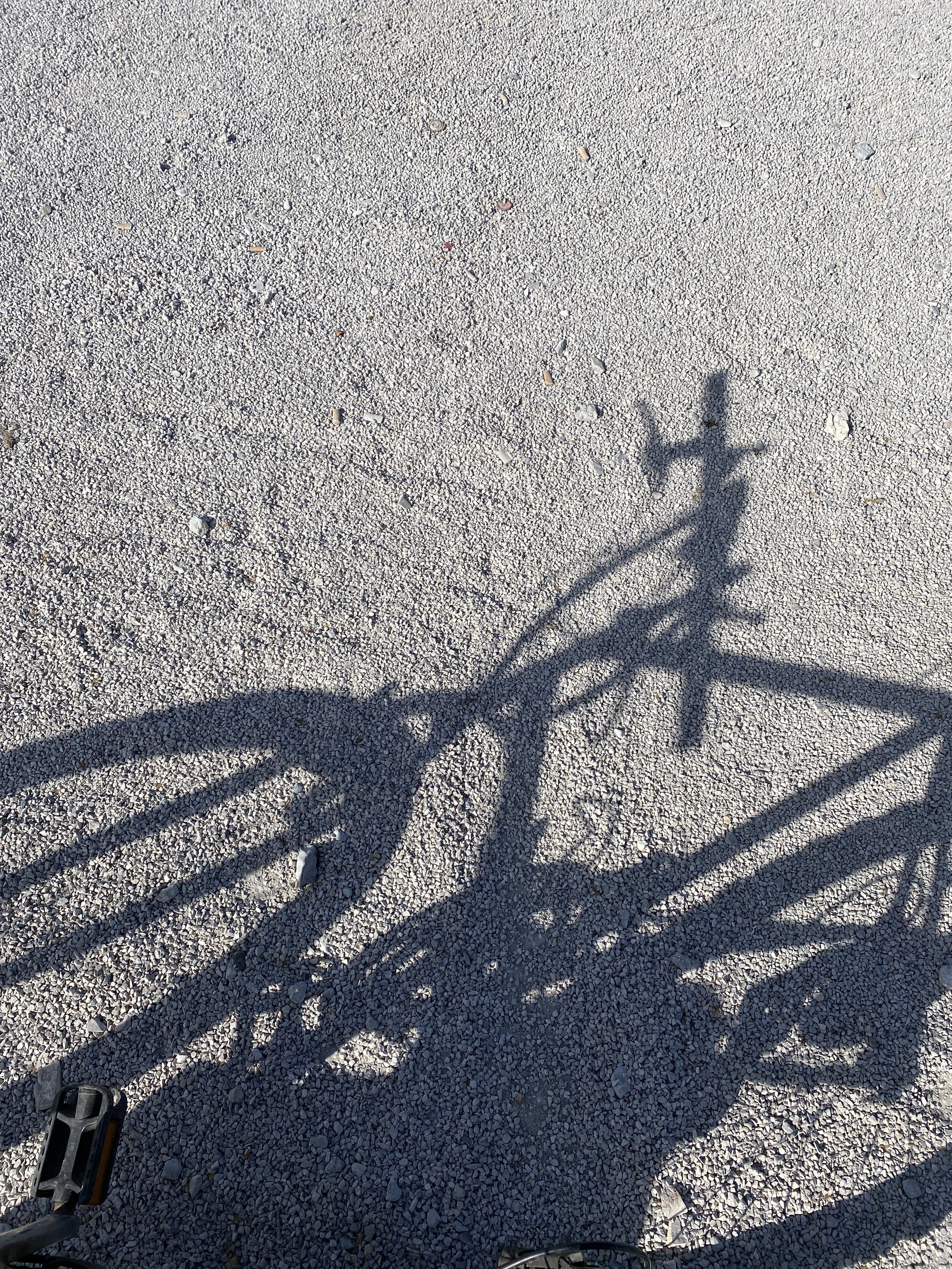
ASF: It's interesting those conditions that reveal themselves when you're in another place. At Pada, I borrowed the bicycle and I commandeered it. It was so funny because it was the most amazing feeling to be able to cycle around and explore. I didn't know where I was. I didn't know what I was gonna see. I didn't know who I was gonna bump into. This bicycle just meant so much to me. Away from all of those things we even put in a structure for ourselves.
AHB: I'm a to-do list every day kind of person. I know that about myself, but even just the obligation of answering emails and knowing that part of my day has to be dedicated towards that to maintain my job, I think there's a luxury in being able to block out that time and to give it back to yourself. I had done an assistant director position at my university for the year leading up to it. This was the reward. It was that hunger to be back in the studio and to not have an agenda of deliverables and to be able to let the place really inform me. I found the industrial park fascinating: the history of it; the way that it was operating currently; but also being in proximity to the open industrial site that was in ruins. I found that incredibly impactful. I felt time really compressed there, both historical time and present time, and then the residency time.
ASF: Absolutely. I made a piece of work with sand. I was fascinated by all the shadows of all the industrial buildings so I did a repetitive endurance piece where I traced the roof line with sand every hour for the day. It was absolutely knackering. I wanted it to be because I was referring to the labour in their factory, the buildings. I don't think I could do that now, to be honest, that durational, physical endurance.What about you? What did you make when you were there?
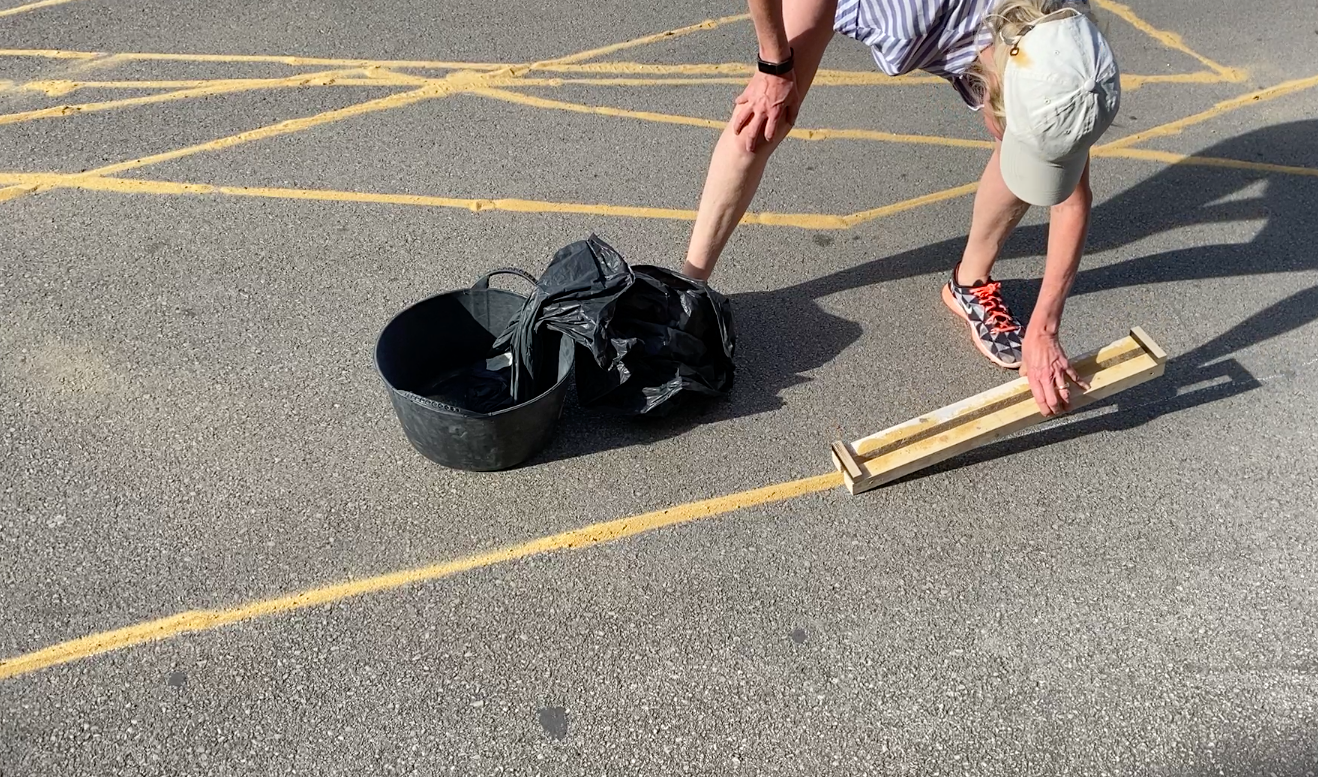
Length of day. Alice Sheppard Fidler
AHB: I was so enamored with these objects that we were finding as we were going on walks. There was a set of chairs. There was a dumpster that I kept visiting that had all of this stuff in it that I would rescue out into one of the shopping carts. I started building these collections or vignettes of objects in the studio space and asking the chairs to interact with one another. They became a piece that I referred to as a cabinet. One of the conversations that I had quite regularly is if the objects are still functional. When you're rearranging them into these objects that I'm calling a cabinet or a stool, they sit in a place where they have a memory of function and they still serve a functional purpose. I had stations of things going on so that when one thing wasn't necessarily working particularly well or I was problem solving, I would go and work on an artist book that I was making and dealing with some fun, really nice happenstance things. I was so interested in how the materials of the site and the place were speaking, but that ended up being the driving force for me.
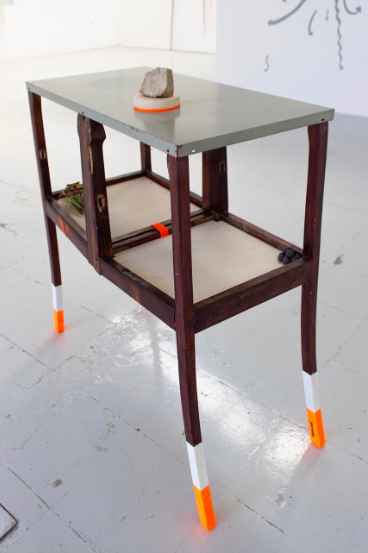
Armoire: like trees are trees, like streams are streams, before the landscape - all landscapes, Aimée Henny Brown, 2023
ASF: I think there were some of the materials that I'd used that you then used because they'd gone back into the recycling.
AHB: I realized that something for me that was really important to discover is that when I use the term collage, it has so much baggage around it. What was exciting for me is that I'm thinking sculpturally in collage as well. I like that objects have their own use history and their own identity that we're kind of asking to gently reshape or drastically alter. And when we're doing that, we're also acknowledging that I'm asking the chair not to be a chair, even though it's still a chair. I think there's something in that playfulness, that sending it back into the world so that it can be that playful object for someone else is a really important part of the cycle there at the residency. I think within the last couple of months the chairs popped up in documentation of someone else's work.
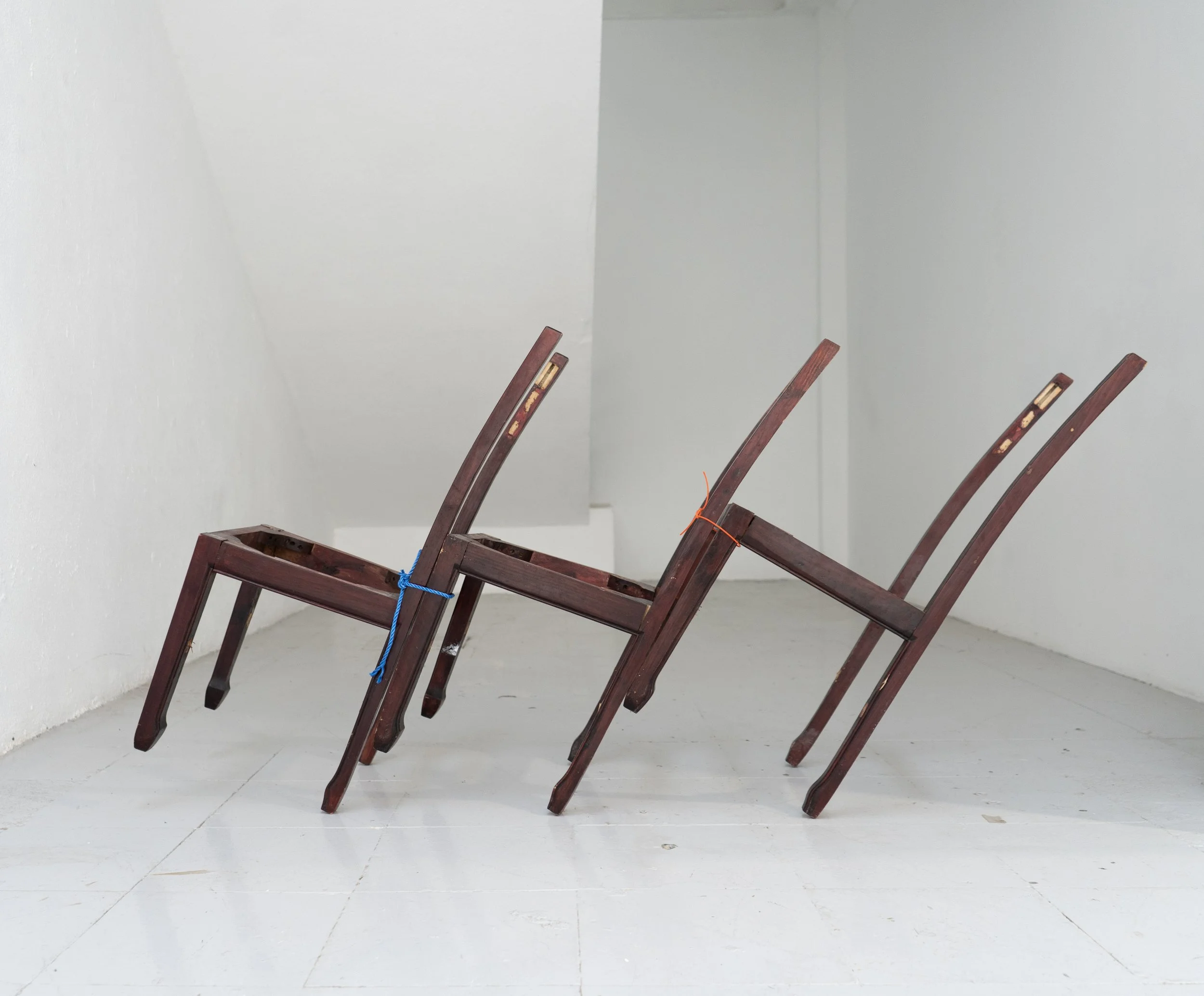
Ever so lightly. Alice Sheppard Fidler
ASF: I haven't looked. That is hilarious.
AHB: Whether they're responding to the wind or to the buildings or to the site or the time or the weather, or the refuse. The bin hunting was phenomenal, changing every day. Why do you use residencies to do [explore your work]?
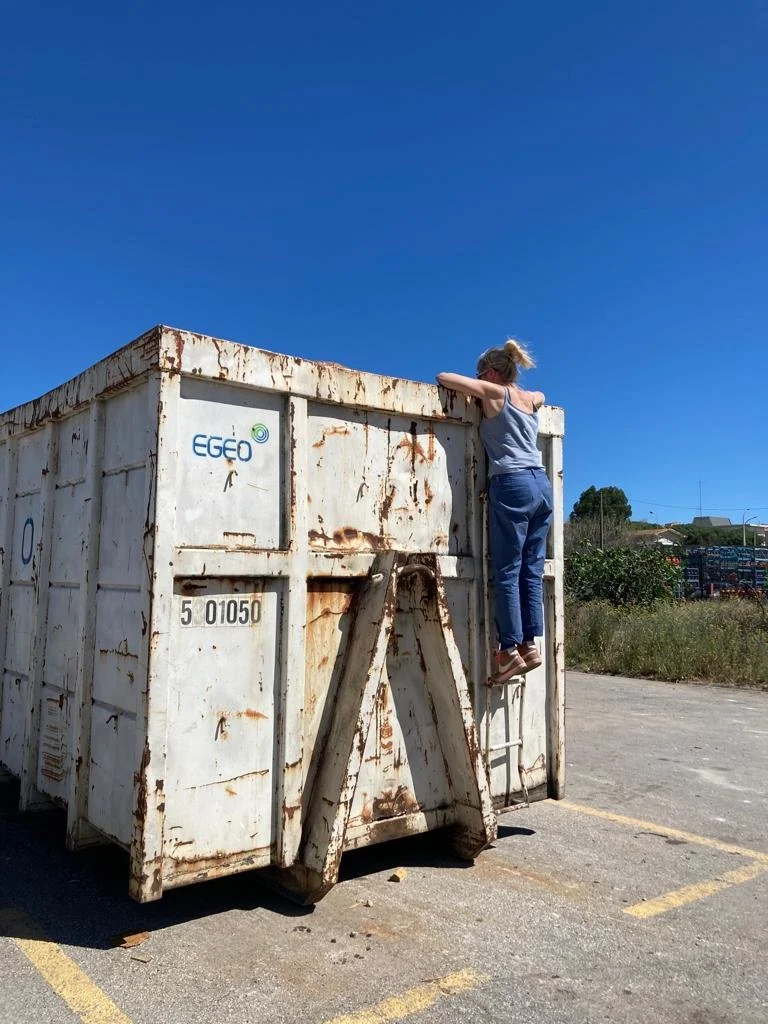
ASF: They really are fundamental to the kind of person I am, not just to get away from those typical demands or constraints or parameters of everyday life, but I'm fascinated by the materials that present themselves in different environments. I've got this laboratory and implements and processes and then it doesn't really matter where I go because I've got this language and behaviour. I was going to this quarry place in England; I didn't want to go. I couldn't understand that I would like it, but I had to go and spend time there. I'm so surprised with the work I've made. A year ago I didn't know that was going to happen. So I am hungry, you use that word, you feel hungry in these kind of environments, and I definitely thrive off that. I'm seeking my next opportunity to do that, but I don't know how it's gonna come about, we'll see.
AHB: That's amazing though, to know that the residencies are a catalyst for you. You're bringing this set of skills and ways of paying attention. The shift of place or shift of mindset is the catalyst that brings you into this new work.
ASF: Definitely. You don't know what life's gonna throw up and obviously you can't always just go. I'm not free to blow with the wind, but it's nice to recognize what feeds the soul and to place it in the future. Have you got some sort of plans or goals?
AHB: I’m thinking at the moment of resetting a little bit. My partner and I call it our series of non-religious miracles: we've managed to buy a house in a market that's ridiculous. And so we've had some things really align. I've had a series of some lofty life goals become satisfied in the last six months.
ASF: Oh my God, I love this idea of these miracles. Please talk about that.
AHB: They're like the secular miracles of life. This is how an animator and an artist manage to be homeowners. That is the secular miracle of our lives right now. So this moment is a little bit of a reset, which is nice to be thinking about. Now that these other life goals are satisfied in a way, it's allowed me to look at the year ahead in a really healthy way. How can I spend as much, if not more time at the studio than in my teaching role? And then after building [new] work, using that as a starting point to get great documentation and to do another big series. I'd like to get myself back into a position where I'm showing a little bit more regularly and then using that work as a ladder to springboard a bit more travel for residencies again. Some of the interesting research threads that I'm using for applications with my university are coming into the work in a good way, looking at things like speculative futures and the possibilities of imagining an alternative way of living, the idea of chosen family. Ideas of abolishing nuclear family structures or like just recognizing that they don't function particularly well. There's this amazing fast friendship that can happen when you're stuck in the residency scenario. And that to me is a kind of nurturing family structure that I'm really interested in. It doesn't need to be about forever.
ASF: I've thought a lot about what does community mean. We've been granulated, we're not brought together, we're broken apart, isolated, you know, and therefore we can be controlled. I don't have religion; I'm quite envious of people that do. Where I've lived, it hasn't happened that I've suddenly belonged to a community. I realised about a year ago that I'm part of the most amazing community and that is the community of artists. And I love what you said about not having to be forever. So I don't feel ever alone anymore because I think of artists in my town, in my region, in the UK, in Europe, and then all the way out to where you are. And, even if I never spoke to another artist in my life, it wouldn't matter because I've realized that I'm held by this. I had a lovely artist staying here and she's not very well. She studied politics and art, and because of her illness, she wants to be active, proactive, radical, and politically active, but what she's said is she's just going to do everything really quietly. It doesn't mean it's not powerful. It doesn't need to be shouted. It doesn't need to be using war language. Nothing's a battle or a fight. What if I use a completely different set of words and ways to protest and to be active and to be present. I love it because it's a complete reframing.
AHB: There's such extraordinary power in choosing a pathway that allows you to say, these are the parameters that I want to express and I have to find the right language for myself […] I found the work very poetic that was coming out of the material investigation that you were doing and then the corrugate and seeing the recycled wood plinths with the samples of material.
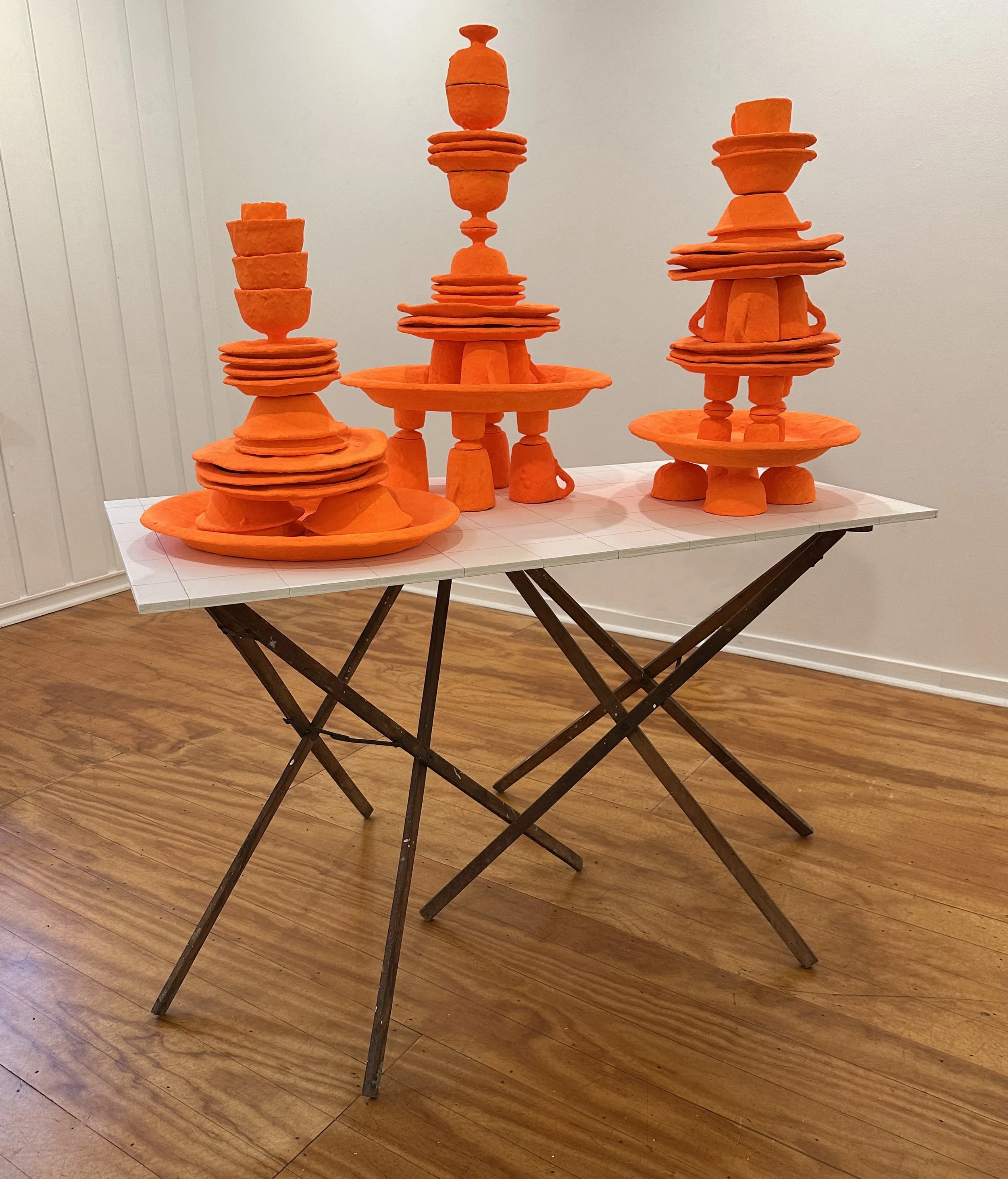
Cairn, Aimée Henny Brown 2023-25
ASF: I did set myself a task there [making] a piece of wall work. I was curious to say “I've not done that before. How am I going to do that?” I enjoyed going through the practical questions about that. But, the carpet and stonework, they work together all the time. The soft thing that holds the hard thing. The work was done, there wasn't anything for me to do, and I had to be brave and just let it be what it was. I wanted it to be like a language or a direction or a dance or something like that. It was not really to do with me in lots of ways. You just don't know, do you? You don't, you just make it and put it out there and see what happens. That's all I can do.
AHB: I think there's something really beautiful in the lesson that you're talking about recognizing the poetics, of there being a soft thing that holds the hard thing and then getting out of the way. I wrestle with that in my work. Will there be enough work in it? Will people be able to see that I've worked hard?
ASF: We can always do more, can't we? There's always more. To me you come across as someone who's deeply sensitive and very intelligent and committed to what you do. It's so interesting, with the doubt, you're like, “is it enough?”
AHB: If we can ask that and be brave in answering it - the work is the answer. The work is also the question, the work is like giving you a way to pose that to the audience, and that's why there doesn't need to be a big didactic panel. I find that such a fascinating moment to arrive at with materials, because the materials have their own history, their own language, their own voices that they're speaking in, and then when you're asking two materials to talk to one another. That's a rich conversation. And the work at that point really is to just get out of the way.